
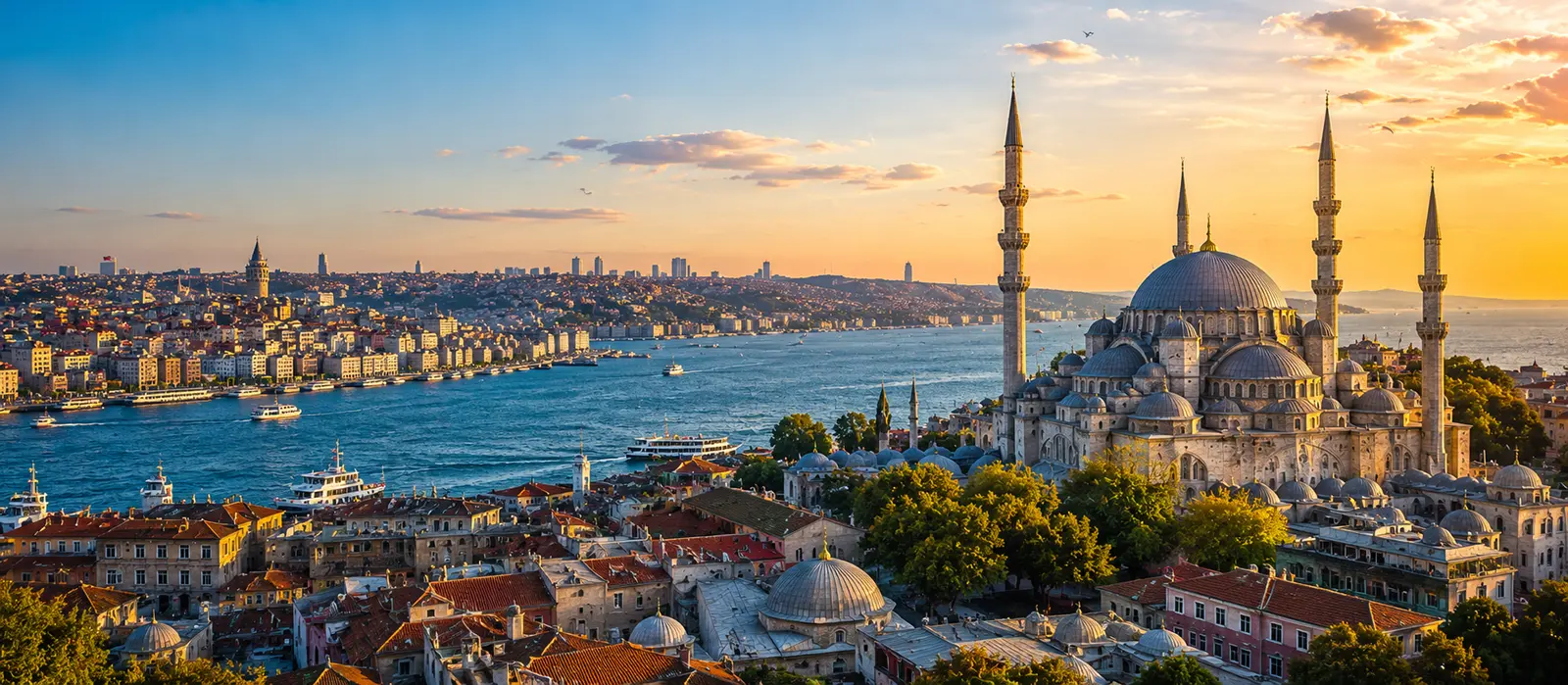
Can One Neighborhood Fill an Entire Day?
A neighborhood becomes a destination when its connections matter as much as its landmarks.
Yes. In Istanbul, one neighborhood can fill an entire day when it offers several connected layers rather than one isolated attraction: streets, markets, history, food, public space, transport, waterfront, residential life, and a rhythm that changes between morning and evening.
The day should not feel artificially stretched. Its value comes from replacing repeated cross-city travel with attention to relationships inside one coherent area.
A neighborhood becomes a destination when its connections matter as much as its landmarks.
Smart Tip
Choose one primary neighborhood and divide the day into four loose layers: morning orientation, one demanding anchor, a food or market interval, and an afternoon or evening change of pace. Keep one nearby extension available, but use it only if the neighborhood naturally runs out—not because an empty hour feels like failure.
A full day does not require a long attraction list
Visitors often measure a destination by the number of named sights it contains. If a neighborhood has only one globally famous landmark, they assume the rest of the day must happen elsewhere.
This overlooks the urban experience between formal attractions. A ferry terminal, bakery, market street, mosque courtyard, park, residential lane, bookshop, café, viewpoint, and evening crowd may not appear with equal prominence on a map, yet together they explain how the area functions.
Variety can occur without geographic distance.
The scale of the itinerary changes what becomes visible
Planning at attraction level produces a chain of pins. Planning at district level produces itinerary granularity. A finer attraction-based plan asks what comes next; a neighborhood plan asks what belongs together.
The second question reveals transitions: commercial streets becoming residential, crowds thinning near water, tourism giving way to local errands, or daytime businesses becoming evening social spaces.
Staying in one area does not reduce experience when the area contains meaningful internal change.
The neighborhood must contain more than one type of time
A place fills a day naturally when morning, midday, afternoon, and evening do not feel interchangeable. Markets may be more active earlier, major sites may demand focused morning energy, waterfronts may improve as light changes, and dining streets may become socially expressive after work.
This temporal variety prevents the day from becoming a prolonged walk through the same atmosphere. The visitor experiences transformation without needing to cross Istanbul.
The question is not only what exists there, but when each layer becomes visible.
| Neighborhood layer | What it contributes | Best role in the day | Common mistake |
|---|---|---|---|
| Major anchor | Historical, cultural, or architectural focus | One concentrated period | Adding several demanding anchors back to back |
| Market or commercial street | Movement, food, prices, and local demand | Late morning or lunch transition | Treating it only as a shopping stop |
| Residential streets | Scale, architecture, and ordinary routine | Unhurried connecting walk | Photographing private life intrusively |
| Waterfront or park | Rest, orientation, and changing light | Afternoon recovery | Scheduling it like a timed attraction |
| Evening center | Dining, social rhythm, and street transformation | Final chapter of the same area | Leaving before the neighborhood changes pace |
Sultanahmet fills a day through historical density
Sultanahmet can easily occupy a full day because Hagia Sophia, the Blue Mosque, Topkapı Palace, the Basilica Cistern, the Hippodrome area, museums, courtyards, and nearby streets demand more attention than their compact map suggests.
The danger is not lack of content but overload. Large sites involve queues, standing, reading, security, visual concentration, and emotional fatigue. Trying to complete every major landmark in one sweep can make historical abundance feel repetitive.
One or two anchors, food, pauses, and nearby walking create a stronger day than a monument marathon.
Beyoğlu fills a day through vertical and cultural change
Karaköy, Galata, İstiklal, side streets, cultural institutions, historic passages, shops, cafés, and evening venues can form a connected day, though the exact boundaries visitors call “Beyoğlu” are often broad.
The area changes through elevation as well as time. A waterfront beginning, steep street, tower area, commercial avenue, quieter side road, gallery, and evening meal can feel like several chapters without requiring a distant transfer.
Hills and crowds should shape the route direction rather than being treated as invisible.
Kadıköy and Moda work as a connected full-day pair
Kadıköy offers ferry arrival, market streets, food, shops, transport intensity, cultural life, and dense pedestrian movement. Moda changes the pace through residential streets, cafés, parks, and shoreline space.
Together they provide internal contrast: arrival activity becomes market exploration, lunch becomes neighborhood walking, and the day can end near water or in a more social evening environment.
The route feels complete because the second area extends the first rather than requiring a disconnected journey.
Üsküdar can fill a day without imitating Kadıköy
Üsküdar offers ferry movement, mosque architecture, markets, waterfront views, local transport, residential connections, and routes toward nearby Bosphorus neighborhoods. Its pace may feel calmer than Kadıköy’s, especially for visitors who are not seeking nightlife.
A day can combine architectural attention, local streets, food, shoreline pauses, and changing views toward the European side. The historic skyline becomes part of the neighborhood experience even though it stands across the water.
Quiet variation can fill time as effectively as concentrated entertainment.
Markets make a neighborhood legible
A local market or commercial street reveals what people buy, when they shop, which foods are practical, how businesses use limited space, and how pedestrian movement changes around deliveries and meals.
Visitors who treat markets only as souvenir locations miss their analytical value. Prices, packaging, customer turnover, specialty shops, bakeries, fish sellers, and prepared food all describe the district’s relationship with daily demand.
The market can become the connective tissue between landmarks and ordinary streets.
Food should support the route rather than interrupt it
A full neighborhood day creates room for more than one food encounter without turning the schedule into a restaurant crawl. Breakfast or bakery food can introduce the morning economy, lunch can respond to the market area, and tea or dessert can provide a useful rest.
The best choice is not always the district’s most famous establishment. A long queue or distant reservation may pull the day away from its geographic logic.
Food becomes more informative when it belongs to the streets already being explored.
Slowness needs structure
Spending all day in one neighborhood does not require wandering without purpose. Completely unstructured time can produce repeated streets, decision fatigue, or the feeling that nothing is happening.
Use a loose sequence: an arrival point, one anchor, a market or food interval, a quieter secondary area, and an evening endpoint. The route remains flexible while retaining direction.
Slow travel works when attention replaces urgency, not when planning disappears.
Mobility changes the size of a neighborhood day
Hills, cobbles, station corridors, large historic complexes, weather, and crowded pavements can make a compact area physically demanding. A neighborhood that appears small on the map may already contain enough movement for a full day.
Families, older visitors, and travelers with mobility needs may benefit most from reducing transfers, but the exact route must include rests, verified entrances, convenient transport exits, and realistic walking direction.
Geographic concentration is useful only when the chosen streets are accessible to the group.
| Traveler interest | Strong full-day choice | Natural internal contrast | Planning caution |
|---|---|---|---|
| Imperial history | Sultanahmet and nearby historic streets | Monuments, courtyards, museums, and shoreline | Limit demanding interiors |
| Culture and evening life | Karaköy–Galata–Beyoğlu axis | Waterfront, hills, institutions, and nightlife | Plan elevation and crowds |
| Food and contemporary rhythm | Kadıköy–Moda | Market intensity and relaxed shoreline | Avoid reducing the day to restaurants |
| Architecture and calmer water | Üsküdar and a nearby extension | Mosques, markets, views, and residential streets | Check return connections |
| Repeat visitor | A less familiar district | Known transport with new local depth | Do not demand famous landmarks |
Use six tests before giving one neighborhood the day
- Layers: Does the area offer more than one type of experience?
- Time: Will morning, afternoon, and evening reveal different rhythms?
- Anchor: Is there one meaningful focus without several exhausting commitments?
- Food: Can meals and pauses fit naturally along the route?
- Movement: Are the streets, slopes, and distances realistic for the group?
- Extension: Is there one nearby option if energy and curiosity remain high?
Some neighborhoods need only a few hours
Not every district should be promoted into a full-day destination. A small residential area with one photogenic street may become repetitive, especially when cafés and shops are doing most of the experiential work.
Combine nearby areas when their transport and street logic support each other. The purpose is not to prove slowness but to avoid unnecessary fragmentation.
Leave when attention has declined, not when an ideological commitment to depth reaches eight hours.
A neighborhood day changes what counts as seeing Istanbul
An attraction itinerary produces strong individual images. A neighborhood day reveals systems: how people arrive, where they pause, what businesses serve, how history shares space with housing, and how the same streets change after work.
The visitor may photograph fewer famous objects while understanding more relationships. That is not a smaller travel day. It is a different unit of discovery.
One neighborhood fills an entire day when the traveler stops asking how many places were reached and begins noticing how one place contains many kinds of city.
Did You Know?
Kadıköy and Üsküdar are not merely sightseeing districts on the Asian side. Their ferry terminals and rail, bus, or local transport connections make them major arrival and transfer points for daily urban movement. That transport role helps explain why the surrounding streets can sustain markets, food, shopping, and social life throughout the day.
Jean Mustafa Kowalski Nakamurason Hernández Obromoviç
Always Local
“I spent an entire day in one Istanbul neighborhood and became concerned that I was traveling too slowly. Then I checked my phone: I had walked fourteen thousand steps, eaten four times, climbed one historical argument, and changed my opinion about the city twice. Fortunately, none of this appeared as an attraction pin, so the itinerary remained officially empty.”
Who is this guy?