
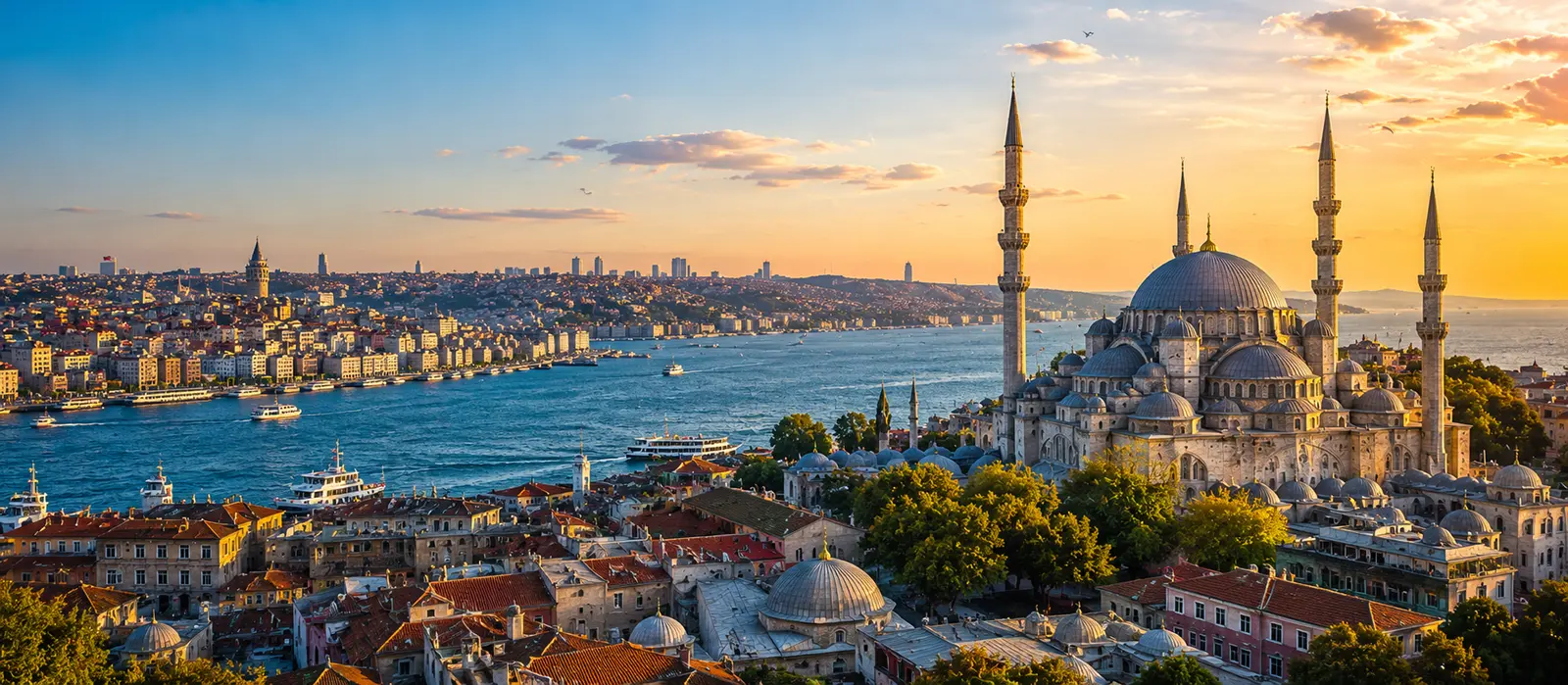
Why Does Istanbul Continue Changing Even for Repeat Visitors?
A return to Istanbul is a meeting between two changed participants.
Istanbul continues changing for repeat visitors because the city and the visitor both move through time. Transport routes, restored buildings, commercial streets, construction, cultural venues, public spaces, and neighborhood economies may change between trips. Memory, confidence, age, interests, and expectations change too.
The returning traveler does not compare today’s Istanbul with a complete historical record. The comparison is made against a selective memory of one earlier encounter.
A return to Istanbul is a meeting between two changed participants.
Smart Tip
Build a repeat visit around three elements: one place you remember strongly, one neighborhood you barely explored, and one route that did not exist in your personal map before. This creates a useful comparison without forcing the entire trip to reproduce or reject the first one.
The city changes physically between visits
New transport connections alter which districts feel close. Restorations change how historic buildings are entered and interpreted. Construction redirects walking routes. Hotels, restaurants, shops, galleries, cultural venues, and public spaces appear, disappear, move, or change purpose.
Some changes are immediately visible; others are experienced as reduced travel friction, a different crowd, a quieter street, a new commercial rhythm, or the loss of a familiar landmark business.
The repeat visitor notices these shifts because an earlier version provides a reference point.
Memory and the present create temporal parallax
A return trip produces temporal parallax. The visitor sees the current street from the position of an earlier self.
A café may truly have changed, but the first visit may also have made it emotionally larger. A square may seem less impressive because it is now familiar, or more meaningful because the visitor understands its relationships better.
The repeat experience contains physical change, remembered change, and changed attention at the same time.
Familiarity makes small changes more visible
First-time visitors devote attention to basic orientation: station names, landmark locations, payment, routes, entrances, and the effort of crossing the city. Large impressions dominate because everything is new.
Repeat visitors spend less attention solving those basics. They notice the bakery that vanished, the restored façade, the altered ferry approach, the new pedestrian pattern, or the different type of business occupying a familiar corner.
The city may feel more changeable precisely because it has become more legible.
| Source of change | What the visitor notices | Possible interpretation | More useful reading |
|---|---|---|---|
| Transport | A district feels easier or differently connected | The city has become smaller | The personal movement network has changed |
| Restoration and construction | Entrances, views, façades, and routes differ | The old place has disappeared | Physical fabric is entering another phase |
| Commerce | Shops, food, prices, and customers shift | The neighborhood has lost authenticity | Demand and identity are being renegotiated |
| Season and hour | Crowds, light, weather, and street use change | The previous memory was inaccurate | Both encounters captured valid moments |
| The visitor | Different places attract attention | The city no longer feels the same | Personal priorities have also moved |
Transport change rewrites mental geography
A district once experienced as a difficult journey may become easy after the visitor learns a direct rail connection, ferry route, or more efficient interchange. The physical distance remains, but uncertainty and effort decline.
This can move places from the edge of the personal map into the normal itinerary. The Asian side may stop feeling like an excursion; a Bosphorus district may become a practical afternoon; a return from the historic peninsula may no longer require the route used before.
Repeat visitors experience a new city whenever their connection map changes.
Restoration changes access to history
Istanbul’s historic fabric is not frozen. Buildings close, reopen, reveal different surfaces, receive new visitor routes, or become surrounded by conservation work. Public understanding also changes as exhibitions, signs, management, and access patterns are revised.
A repeat visitor may interpret restoration as recovery, disruption, over-polishing, necessary protection, or a loss of remembered atmosphere. Several reactions can coexist because preservation changes both material condition and experience.
Historic continuity often includes visible intervention.
Commercial change is faster than architectural change
A building can remain while every business at street level changes. New cafés, hotels, restaurants, studios, chains, boutiques, and short-term visitor services alter who uses the pavement, which hours are active, and what prices the area expects.
These changes are especially noticeable in districts receiving tourism, investment, nightlife, creative industries, or new transport attention. Karaköy’s recurring reinvention makes this process visible, but it is not limited to Karaköy.
The street changes socially before the skyline changes physically.
Neighborhood identity is continuously negotiated
Neighborhoods are shaped by residents, workers, property owners, visitors, transport users, businesses, municipal decisions, cultural institutions, and online attention. None controls the identity alone.
When one force grows, the district’s public image may change faster than daily life beneath it. A place can become internationally fashionable while remaining an ordinary transport, residential, or workplace center for many people.
Repeat visits reveal the tension between the marketed neighborhood and the lived neighborhood.
Season creates different versions of the same route
A waterfront in winter wind does not communicate the same invitation as the same waterfront on a warm evening. Rain changes pavement, shelter, queue behavior, and willingness to climb hills. Summer extends public life later into the day, while colder conditions redistribute activity indoors.
Light also changes the relationship between skyline, water, stone, vegetation, and crowds. A visitor returning in another season is not merely seeing different weather.
The social use of the city has changed around that weather.
Time of day can imitate long-term change
A market street before opening, during lunch, after work, and late at night can feel like four different places. Sultanahmet before tour groups, during peak visitor hours, and after major sites close also produces sharply different impressions.
If the first trip encountered a district only at noon and the return reaches it early or late, the visitor may attribute the difference to years rather than hours.
Repeat visits become more accurate when familiar places are tested at unfamiliar times.
The visitor’s interests change what Istanbul contains
A first visit may focus on imperial monuments and famous views. A later trip may prioritize food, architecture, local markets, contemporary art, transport, parks, religious history, photography, nightlife, or ordinary neighborhood life.
The city appears to have acquired new material because the visitor has acquired new questions. Places ignored before become central, while former priorities require less time.
Istanbul changes when the lens becomes more specific.
Memory edits the first trip into a cleaner story
Travel memory often removes waiting, wrong turns, ordinary meals, closed doors, tired hours, and the uncertain periods between strong impressions. What remains is a concentrated narrative of highlights and emotions.
The return trip happens in real time, with friction fully present. Comparing an edited memory with an unedited present can make the city seem noisier, slower, more commercial, or less magical than before.
The comparison becomes fairer after recognizing that memory has already completed its restoration work.
| Repeat-visit strategy | What it reveals | Best use | Main risk |
|---|---|---|---|
| Return to one remembered place | Physical and emotional change | Compare without rebuilding the whole first trip | Demanding the original feeling |
| Visit at another hour | Daily rhythm and different users | Separate temporal change from long-term change | Mistaking one moment for the entire district |
| Use a new transport axis | A different geography of connection | Move former edges toward the center | Repeating familiar routes automatically |
| Choose a new neighborhood base | Another daily rhythm | Change mornings, evenings, and local habits | Judging it against the first hotel district |
| Leave flexible time | Current interests rather than old priorities | Allow the trip to respond to evidence | Filling every opening with nostalgia |
Use six practices to make a return genuinely different
- Anchor: Revisit one place that carries a strong memory.
- Contrast: Choose one district that received little or no attention before.
- Timing: See a familiar area at another hour or season.
- Connection: Use a ferry or rail route outside the old personal map.
- Question: Follow a current interest rather than the first trip’s checklist.
- Space: Protect free time for a return, discovery, or changed plan.
Nostalgia can identify change and distort it
Nostalgia is useful because it records attachment. Disappointment may reveal a lost business, altered public space, increased crowding, or a neighborhood economy moving in another direction.
It becomes misleading when the remembered city is treated as complete, neutral, and permanently entitled to remain available. The earlier visit also occurred during a temporary phase that had already replaced something else.
Return with affection, but allow the present to provide evidence.
Istanbul changes because repetition increases understanding
The first visit asks where the monuments are and how to reach them. Later visits can ask why districts feel different, who uses the waterfront, how commerce changes a street, why a transport connection reorganizes distance, or how history survives through adaptation.
The city appears less stable because the visitor now sees processes instead of objects. What once looked like a finished destination becomes an active urban system.
Istanbul does not remain new by hiding itself; it remains new because greater familiarity reveals how much of the city was always in motion.
Did You Know?
The same Istanbul skyline can be encountered from streets, hills, bridges, waterfronts, and public ferries on different shores. The monuments may remain in place while distance, light, movement, and viewing direction reorganize their relationships—allowing a repeat visitor to see a familiar city without repeating the original viewpoint.
Jean Mustafa Kowalski Nakamurason Hernández Obromoviç
Always Local
“I returned to Istanbul and found that several streets had changed, two cafés had vanished, and my favorite view seemed smaller. I filed a complaint against the city. Istanbul replied that I had also changed, but I rejected this as an irrelevant technicality outside municipal jurisdiction.”
Who is this guy?