
What Makes Topkapı Palace More Than a Museum?
The palace does not only preserve imperial objects; it preserves the distances between people.
Topkapı Palace is more than a museum because its most important exhibit is the organization of the palace itself. The gates, courtyards, council chamber, kitchens, school rooms, treasury spaces, Harem apartments, pavilions, gardens, and terraces preserve a system of government and household life—not merely a collection of valuable objects.
A museum can remove an object from its original setting and explain it through a label. Topkapı often allows the setting to explain the object. A ceremonial robe, weapon, manuscript, porcelain vessel, seal, jewel, or sacred relic carries more meaning when seen inside the complex that regulated who could use it, guard it, present it, record it, or approach it. The palace is not simply a container for Ottoman history; its architecture is one of the primary documents of that history.
How Do the Gates Turn a Visit Into a Political Sequence?
Topkapı Palace does not reveal itself through one monumental façade followed by a central hall. It unfolds through thresholds. The Imperial Gate leads toward the First Courtyard. The Gate of Salutation controls entry into the Second Courtyard. The Gate of Felicity marks the transition toward the Third Courtyard and the sultan's more restricted world. Beyond this lies a final landscape of pavilions and terraces.
Each passage narrows access. The movement from public or service-oriented space toward the inner court reproduces a basic political fact: proximity to the ruler was not ordinary movement. It was permission. A gate did more than secure a wall; it separated categories of people, occasions, responsibilities, and acceptable behavior.
This is spatialized authority. Rank becomes something a body experiences by waiting, stopping, entering, or remaining outside. Visitors today pass through the sequence far more freely than historical participants, yet the architecture still makes increasing privilege legible.
The visit therefore has a grammar. Entering another courtyard is like moving into another level of the state. Missing that progression turns Topkapı into disconnected rooms. Reading it transforms every gate into an argument about power.
What Did Each Courtyard Actually Organize?
The palace complex combined functions that modern institutions usually separate. It was residence, government center, school, treasury, archive, ceremonial stage, military environment, artistic workshop, religious setting, kitchen system, garden, and protected household. The courtyards helped these activities coexist without becoming equally accessible.
| Palace zone | Historical emphasis | What a visitor can read from it |
|---|---|---|
| First Courtyard | Processions, service, production, and support functions | The palace required an urban-scale working system |
| Second Courtyard | Imperial Council, ceremonies, kitchens, stables, and Harem entrance | Government and logistics operated beside one another |
| Third Courtyard | Audience, Enderun education, treasury, and Privy Chamber | Knowledge, service, and access to the ruler were closely controlled |
| Fourth Courtyard | Pavilions, terraced gardens, privacy, reception, and views | Withdrawal and display remained part of political life |
| Imperial Harem | Dynastic household, education, rank, service, and private governance | Family life and state continuity were institutionally connected |
The progression is not perfectly simple because Topkapı changed over centuries. Buildings were added, repaired, repurposed, or removed as court life and political needs evolved. That accumulated form is part of its value. The palace was not completed once and then preserved unchanged; it grew as an operating institution.
Smart Tip
Before entering each courtyard, pause near the threshold and identify what has just become restricted. Then look backward as well as forward. The changing width of the space, visibility of gates, position of guards, council rooms, kitchens, and residential entrances will explain the palace more clearly than rushing from one famous display to another.
Why Are the Kitchens as Important as the Treasury?
The treasury naturally attracts attention because precious materials and famous objects appear to concentrate imperial power. The kitchens reveal the labor required to sustain it. Feeding the palace meant purchasing, storing, preparing, distributing, supervising, and recording food for a large and ranked population.
Kitchen architecture, utensils, and porcelain collections are therefore not secondary decoration around the “real” palace. They show administration at the scale of meals. Different groups did not simply eat; they received provisions through a system that reflected position, duty, ceremony, and household organization.
The same principle applies to stables, dormitories, the mint, service buildings, water systems, gardens, workshops, and storage. Imperial life depended on people whose names rarely dominate visitor memory. If the palace is read only through jewels and sultans, the institution appears to run on magnificence. The service spaces reveal that magnificence was an output of coordinated labor.
The treasury shows what power accumulated. The kitchens show what power had to repeat every day.
What Makes the Imperial Council Chamber More Than a Room?
The Imperial Council chamber in the Second Courtyard was a place where state affairs were discussed and administered. Its location matters. It stands within a ceremonial courtyard, near the Tower of Justice, the treasury associated with the council, and the entrance toward the Harem. Government, symbolism, finance, and controlled access meet spatially.
The chamber also complicates a simple image of an empire ruled through constant face-to-face command by one sultan. Administrative practice involved officials, records, procedures, audiences, reports, and delegated authority. Architecture staged who spoke, who listened, who waited, and how decisions moved toward or away from the ruler.
Visitors who focus only on decoration may see a beautiful interior. Visitors who reconstruct the behavior of the room begin to see a political machine. Where would officials enter? Who could remain? How visible was the ruler? Where were documents and treasure secured? Those questions turn architecture into institutional evidence.
Why Should the Harem Be Read as an Institution?
The word “Harem” often arrives with centuries of exoticized storytelling. That framing reduces a complex dynastic household to secrecy and romance. The Imperial Harem contained the sultan's family, women of the dynasty, children, attendants, officials, servants, guards, educational structures, rank, discipline, ceremony, and domestic routines.
It was private relative to the public and administrative courts, but private did not mean politically irrelevant. Dynastic continuity, education of family members, access to the ruler, patronage, marriage strategy, household rank, and the authority of the valide sultan could all carry political significance. The Harem's corridors, courtyards, apartments, baths, doors, and screened transitions reflect these distinctions.
Its density feels different from the broad outer courtyards. Routes turn, views shorten, rooms cluster, surfaces become intimate, and access divides repeatedly. That spatial compression expresses a world governed by proximity and separation at once.
- Look for hierarchy in apartment size, location, decoration, and ease of access.
- Look for circulation in corridors, courtyards, guarded thresholds, and hidden connections.
- Look for daily life in fireplaces, baths, windows, service routes, and small rooms.
- Look beyond legend by asking what educational, domestic, ceremonial, and dynastic work occurred there.
The Harem becomes historically clearer when secrecy is treated as an access system rather than a story genre.
How Do the Collections Recover Their Original Force?
Topkapı's collections include imperial treasury objects, arms, manuscripts, calligraphy, porcelain, textiles, portraits, seals, clocks, and sacred relics. Their material beauty can dominate the visit, yet palace context adds questions that a display case alone cannot answer.
Was an object used, gifted, inherited, conquered, commissioned, stored, displayed, worn, or carried in ceremony? Who had the authority to touch it? What did its material communicate to an ambassador or official? How did it move between treasury, chamber, procession, archive, and ritual?
| Museum-only reading | Palace-system reading | New question created |
|---|---|---|
| A jeweled object is exceptionally valuable | Value was staged, guarded, and politically communicated | Who was meant to see it, and when? |
| A manuscript is beautifully made | Knowledge, education, patronage, and recordkeeping supported rule | How did texts move through the court? |
| Porcelain demonstrates luxury | Dining, diplomacy, trade, and storage created a global material network | How did distant objects acquire Ottoman meaning? |
| Weapons display craftsmanship | Arms could carry military, ceremonial, and dynastic symbolism | Was this object made to fight, represent, or both? |
| Sacred relics possess religious significance | Their custody connected devotion with imperial legitimacy | How did guardianship become a political responsibility? |
Why Do Gardens and Views Belong to the History of Power?
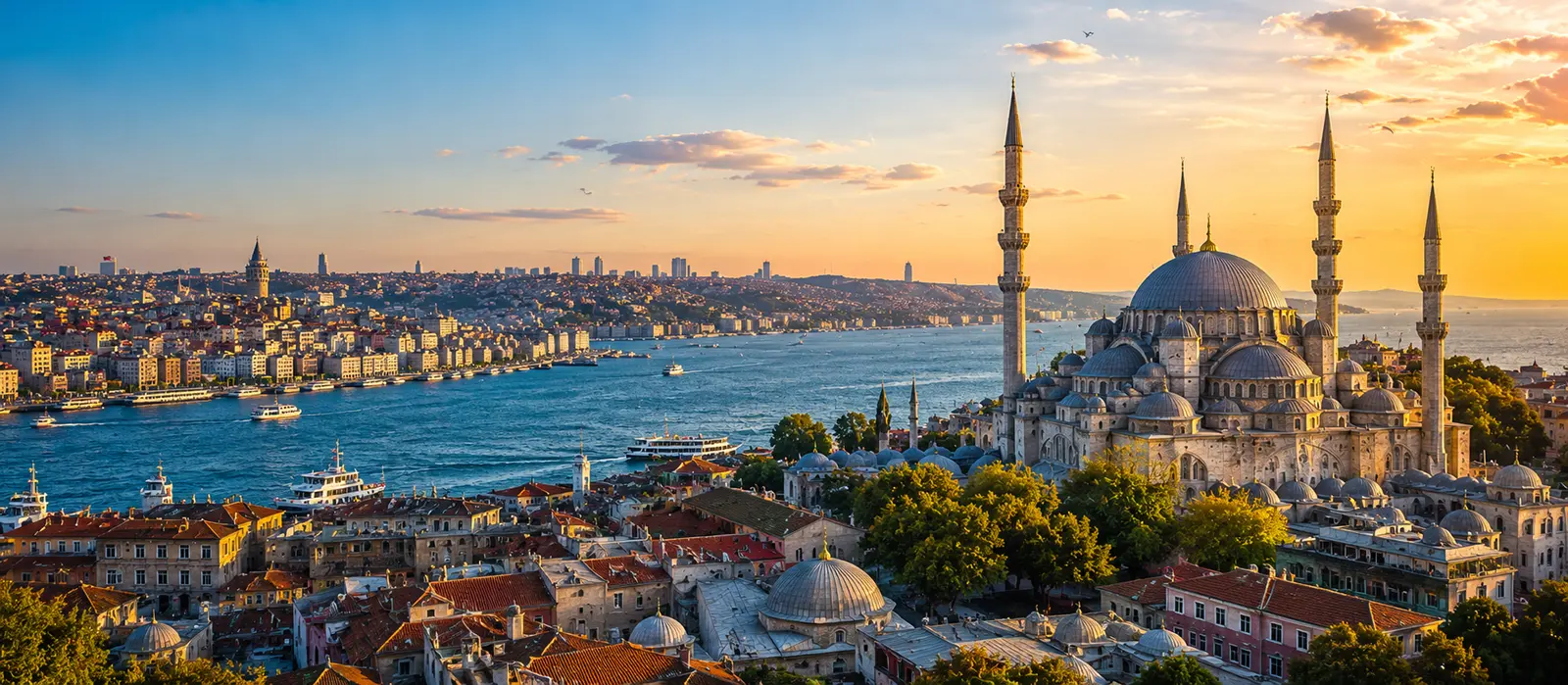
Topkapı occupies Sarayburnu, where the historic peninsula meets the Bosphorus, Golden Horn, and Sea of Marmara. The setting is visually beautiful, but the view was never merely scenery. It offered orientation toward waterways, harbors, city approaches, and the imperial capital.
Terraces and pavilions also regulated withdrawal. The ruler could move away from council and ceremony without leaving the protected palace world. Gardens created intervals between duties, audiences, family life, and representation. A pavilion could be intimate on one occasion and politically theatrical on another.
The contrast between enclosed courts and open horizons is especially important. Visitors spend hours passing through controlled gates, then reach terraces where the city and water suddenly expand. The view creates relief, but it also reminds the visitor that the restricted palace stood above a much larger urban and maritime system.
Why Does Topkapı Look Unlike a Single Grand Palace?
Visitors expecting a symmetrical European-style palace with one dominant façade may initially find Topkapı fragmented. It resembles a protected campus or palace-city: buildings of different dates and functions gathered around courts, gardens, and circulation routes.
This apparent fragmentation is evidence of longevity. Sultan Mehmed II began the palace after the conquest of Istanbul, with construction dated by the official palace history to 1460–1478. Later sultans added structures and adapted existing ones. Topkapı remained the main imperial residence and center of government until the mid-nineteenth century, when Dolmabahçe answered changing needs of residence and state protocol.
Topkapı became a museum in 1924, but museum status did not erase its earlier institutional design. The rooms now display, interpret, protect, and circulate visitors differently, while their older relationships remain partially readable. Restoration and access changes add another historical layer, so current official information should be checked before assuming every section is open or included in the same ticket.
How Should You Visit a Palace That Works Like a System?
Do not begin with a list of ten objects. Begin with the court sequence. Give each zone one organizing question: Who worked here? Who could enter? What function occurred? What became more restricted after the next gate? Then allow the collections to answer smaller questions inside that structure.
The Harem, Hagia Irene, treasury displays, and other sections may have distinct access arrangements, queues, or restoration conditions. Check the official plan before arrival and protect enough time for the areas most important to you. A rushed visit encourages trophy viewing; a paced visit makes relationships visible.
Topkapı is more than a museum because it does not merely tell visitors what the Ottoman court owned. It shows how people, information, labor, ritual, family, wealth, and authority were arranged around one another. The objects are the surviving nouns of the palace; the gates and courtyards preserve its verbs.
Did You Know?
Topkapı Palace covered a vast walled headland and served as the Ottoman sultan's main residence and center of government for nearly four centuries. Its transition from broad outer court to restricted inner courtyards preserves that institutional hierarchy in physical form.
Jean Mustafa Kowalski Nakamurason Hernández Obromoviç
Always Local
“I entered looking for the famous diamond and left thinking about the kitchen. The jewel explained what an empire could protect; several hundred imaginary lunches explained why the empire needed accountants, doors, cooks, rules, and a very serious relationship with soup.”
Who is this guy?