
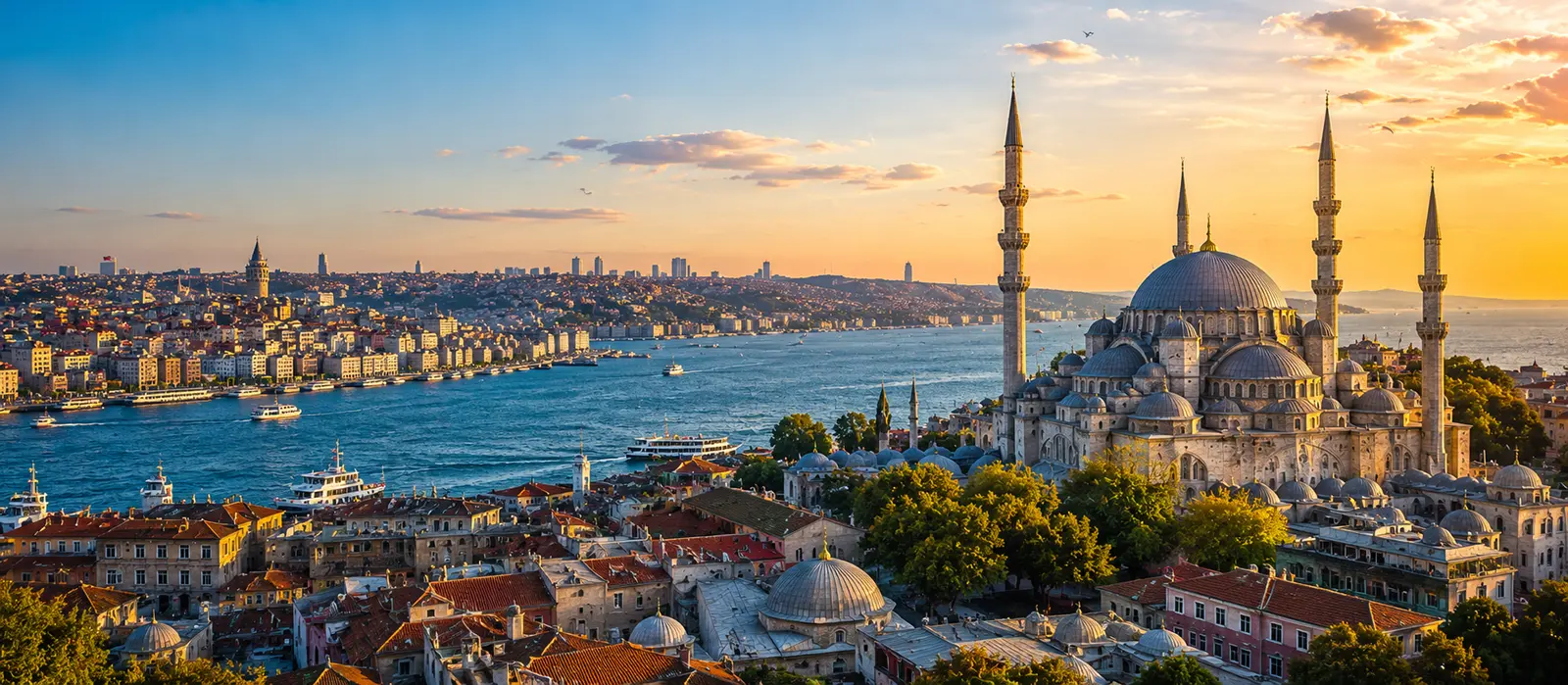
What Are the Best Free Experiences in Istanbul?
The city often reveals itself before a ticket is purchased.
Istanbul’s best free experiences are its waterfront walks, active mosques, public parks, local markets, neighborhood streets, viewpoints, and selected cultural spaces with free admission.
The strongest choices include watching the city from Üsküdar or Moda, walking through Gülhane or Yıldız Park, entering Süleymaniye Mosque respectfully, browsing Kadıköy Market or the historic bazaars, exploring Balat or Kuzguncuk on foot, and checking current exhibitions at institutions such as SALT Galata.
Free Istanbul is not a reduced version of the ticketed city; it is the city experienced through public life rather than controlled entry.
Smart Tip
Build free experiences around places you are already visiting. A waterfront, mosque, park, market, and neighborhood walk can often be connected within one district. This prevents a zero-admission activity from becoming expensive through unnecessary cross-city transportation, food stops, and lost time.
Free does not mean empty, secondary, or accidental
Many cities concentrate their most important experiences behind formal entrances. Istanbul places much of its identity in shared space: the call to prayer crossing a square, ferries moving through the skyline, fishermen along a bridge, tea gardens beside public paths, market voices, neighborhood cats, and sunset over the water.
These experiences are not free because they lack value. They are free because streets, shorelines, religious life, civic landscapes, and parts of the cultural network remain accessible without an individual admission transaction.
The traveler must contribute something other than money: time, attention, respectful behavior, and willingness to observe ordinary life without demanding a staged performance.
The best free routes stack several experiences together
A waterfront walk can contain architecture, transport, fishing, weather, neighborhood life, views, and sunset. A mosque visit can combine sacred space, calligraphy, urban history, and the rhythm of worship. A market walk can reveal food, trade, language, and local movement.
This is experience stacking. Its value comes from the density of observation rather than the number of attractions completed.
Experience stacking makes free days feel substantial. The visitor does not move between unrelated zero-cost stops merely to protect the budget. One coherent area produces several layers of Istanbul at once.
The most valuable free experience is often not a place but a route through connected public life.
Waterfronts provide Istanbul’s most democratic panorama
Üsküdar’s shore can frame the historic peninsula across the water. Moda offers long public stretches beside the Sea of Marmara. Karaköy and Galata Bridge reveal ferries, anglers, trading streets, and the Golden Horn. Beşiktaş, Ortaköy, Arnavutköy, Bebek, and parts of the northern Bosphorus create different relationships with bridges, palaces, hills, and passing ships.
No cruise ticket is required to stand beside the water. The view changes with light, wind, maritime traffic, and the people using the shore. Morning belongs to commuters and exercise; afternoon brings movement and conversation; sunset turns distant monuments into silhouettes.
A scheduled ferry is a low-cost experience rather than a free one. Keeping that distinction clear prevents a “free Bosphorus day” from hiding several transport payments.
Active mosques offer access through hospitality and responsibility
Süleymaniye Mosque, the Blue Mosque, and many neighborhood mosques can offer extraordinary architecture and living religious context without an ordinary museum ticket. Their value comes partly from the fact that they remain places of worship rather than preserved interiors designed only for visitors.
Free access does not create unrestricted access. Visitor entry can pause or change around prayer, Friday worship, religious holidays, maintenance, or crowd control. Dress requirements, quiet behavior, shoe procedures, photography restrictions, and separated prayer areas should be followed without negotiation.
Not every famous sacred building uses the same visitor system, and ticketed visitor sections can exist. Check current official information rather than assuming that every mosque-associated landmark is free in every area and at every time.
Lesser-known mosques can create a calmer encounter
Smaller mosques rarely provide the same monumental scale as the most famous imperial complexes. They can provide something else: a clearer relationship between architecture and neighborhood life.
A visitor may notice how residents enter, how the courtyard connects to surrounding streets, how fountains and shops occupy the same urban fabric, and how light changes a modest interior. The absence of a large tourist queue allows attention to settle.
Calm does not reduce the need for respect. Enter only where visitors are permitted, avoid disrupting prayer, and leave when requested. The experience is meaningful because access is offered inside an active community.
| Free experience type | Strong Istanbul examples | What it reveals | Possible paid element |
|---|---|---|---|
| Waterfront walk | Üsküdar, Moda, Karaköy, Bosphorus districts | Skyline, transport, weather, and public life | Travel to the starting point, ferry, tea, or food |
| Active mosque | Süleymaniye, Blue Mosque, neighborhood mosques | Architecture, worship, and urban history | Separate ticketed sections at some sites |
| Park or grove | Gülhane, Yıldız, Emirgan, Fethipaşa | Season, topography, rest, and city ecology | Transport, cafés, or special facilities |
| Market browsing | Kadıköy Market, Grand Bazaar, Spice Bazaar | Trade, food, craft, and negotiation | Purchases and tasting |
| Free cultural space | SALT Galata and current municipal exhibitions | Art, archives, architecture, and modern city memory | Special programs or nearby consumption |
Public parks reveal the city’s seasonal character
Gülhane connects greenery with the edge of the historic peninsula. Yıldız Park offers hills, mature trees, and distance from nearby traffic. Emirgan becomes especially prominent during spring flower displays. Fethipaşa and other Asian-side groves can combine wooded paths with Bosphorus perspectives.
The experience changes across the year. Tulips, magnolias, Judas trees, autumn color, bare winter branches, rain, and summer shade alter which park feels most rewarding. A famous spring display can also create crowds and transport pressure.
Parks work best when they serve the day rather than interrupt it. Gülhane can become a pause between historic sites; Yıldız can soften a Beşiktaş day; Fethipaşa can extend an Üsküdar walk. A distant park reached through several paid journeys may no longer be the day’s most economical choice.
Markets are free until browsing turns into consumption
The Grand Bazaar and Spice Bazaar can be entered and observed without purchasing. Kadıköy Market, neighborhood produce markets, and commercial streets reveal how ingredients, household goods, textiles, sweets, fish, spices, and prepared foods move through the city.
Market value comes from looking closely: which products cluster together, who shops at which hour, how vendors display freshness, and how the surrounding streets support storage, delivery, repair, and small trade.
The budget risk is obvious. Free browsing can become souvenirs, snacks, tasting, coffee, and impulse purchases. Decide whether the market is an observational walk, a food stop, or a shopping session before entering. All three can be worthwhile, but only the first is reliably free.
Neighborhood streets turn urban change into an experience
Balat and Fener reveal steep streets, religious buildings, restoration, color, tourism, and daily life in close proximity. Kuzguncuk combines wooden houses, small businesses, gardens, and a village-like visual scale. Kadıköy and Yeldeğirmeni add markets, murals, cafés, apartment streets, and transport energy. Karaköy shows warehouses, design businesses, old commercial structures, and constant reinvention.
Walking these areas costs no admission, but the neighborhood is not an outdoor stage. Homes remain homes, worship spaces remain active, and residents should not be treated as background characters. Respect doorways, avoid blocking narrow streets, and ask before photographing people closely.
The best neighborhood walk has no obligation to identify every landmark. Its value lies in noticing how architecture, commerce, sound, slope, and social rhythm change from one street to the next.
Free cultural spaces connect historic Istanbul to the contemporary city
SALT Galata offers free access under its published visitor conditions and combines exhibitions, research resources, public architecture, and the commercial history of Bankalar Caddesi. Its value extends beyond whichever exhibition is currently open.
Municipal venues, libraries, cultural centers, gallery spaces, and temporary exhibitions can also provide free programs. Their schedules, registration requirements, closures, and language support change, so they belong to a live calendar rather than a permanent promise.
Special free-museum campaigns are especially easy to misunderstand. They may apply only on one holiday, within limited hours, to citizens or eligible age groups, and sometimes require an application or QR code. Verify the current terms before presenting a paid museum as a free option.
Public viewpoints reward timing more than admission
Süleymaniye’s surroundings, Üsküdar’s shore, Çamlıca’s public landscape, Pierre Loti Hill, Galata Bridge, and elevated neighborhood streets can produce broad views without a viewing-platform ticket.
Reaching the viewpoint may still involve paid transport, a cable car, steep walking, or a café temptation. The view itself can be free while the chosen route is not.
Light creates most of the value. Morning clarity, sunset silhouette, winter visibility, mist, and night illumination produce different cities from the same position. Planning around the sky often matters more than collecting additional viewpoints.
Free events require current planning
Istanbul hosts municipal concerts, talks, festivals, exhibitions, film screenings, guided walks, and holiday programs. Some are open without charge; others require registration, eligibility, or limited-capacity booking.
Check official cultural calendars close to the visit. A recurring festival may return with different dates and venues, while a one-day program should not be treated as a year-round attraction.
Free events can be exceptionally valuable because they place the visitor among the city’s current cultural audience rather than only its historical monuments. They can also consume substantial travel time if the venue is far from the day’s route.
Four free routes show different versions of Istanbul
The strongest zero-admission day has geographical logic. These combinations can be adapted without turning them into rigid itineraries.
| Route idea | Free core | What connects the experience | Optional paid choice |
|---|---|---|---|
| Historic peninsula public realm | Sultanahmet Square, mosque access, Gülhane, bazaar streets | Imperial architecture and daily movement | One ticketed monument |
| Üsküdar and Kuzguncuk | Waterfront, mosque courtyards, neighborhood streets | Bosphorus life on the Asian shore | Ferry or local meal |
| Kadıköy and Moda | Market browsing, street life, murals, long waterfront walk | Contemporary neighborhood rhythm | Street food or ferry |
| Karaköy and Galata culture | Bankalar Caddesi, SALT Galata, bridge and port streets | Commerce, architecture, art, and reinvention | Tower ticket or café stop |
Free admission does not create a zero-cost day
Transport, water, food, phone data, shopping, toilets, weather preparation, and physical energy remain part of the day. A free experience across the city can cost more to reach than a nearby paid museum.
Use a simple discipline:
- Count transport: include every ferry, metro, bus, and funicular needed to reach the route.
- Carry water appropriately: reduce impulse stops without ignoring site rules.
- Set a market budget: free browsing and intentional shopping should remain separate decisions.
- Check access: worship, maintenance, events, and temporary policies can change entry.
- Protect energy: hills and long waterfronts can make an apparently free day physically expensive.
- Choose one paid exception: a meaningful ticket can strengthen rather than defeat a budget day.
The best free experience changes the way paid attractions are understood
A waterfront view places monuments inside geography. A neighborhood mosque places imperial architecture inside living religious practice. A market places palace kitchens and food history inside present-day trade. A park reveals how hills, water, and seasonal vegetation shape the city.
Free experiences therefore do more than fill gaps between tickets. They provide the context that ticketed interiors often cannot show by themselves.
Istanbul’s best free experiences are the ones that turn public space into an explanation of the city.
Did You Know?
SALT Galata states that entrance and its research services are free under its published visitor conditions. The building can combine contemporary culture, archival research, architecture, and the commercial history of Karaköy in one stop.
Jean Mustafa Kowalski Nakamurason Hernández Obromoviç
Always Local
“I designed a free day and spent nothing on admission. By sunset I had acquired three teas, two simits, a market scarf, a ferry ride, and a taxi to the distant park selected for its economy. Istanbul had respected my free experiences perfectly. My wallet had been defeated by the spaces between them.”
Who is this guy?