
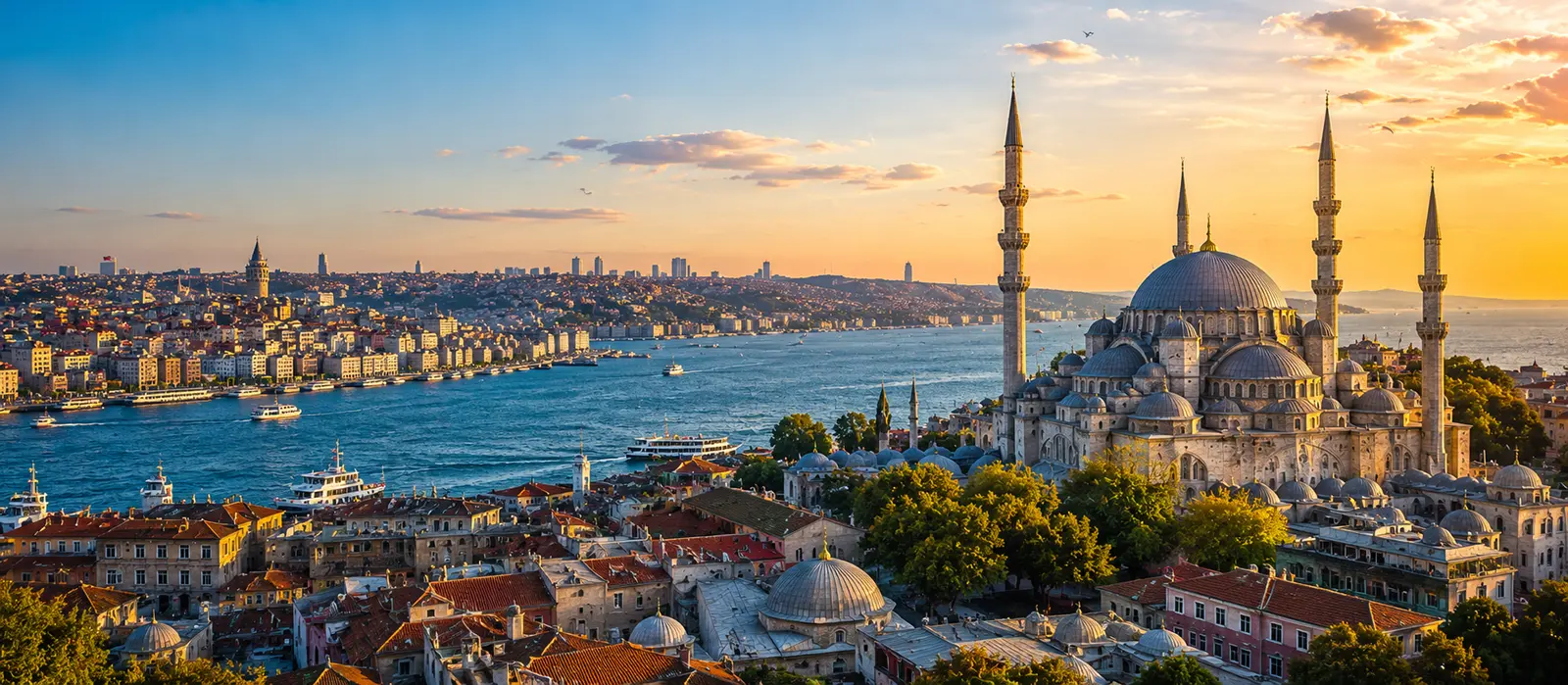
Is Istanbul More Flexible Than Many European Capitals for Budget Travelers?
A flexible city lets the budget change without making the journey disappear.
Often, yes. Istanbul can be more flexible than many European capitals for budget travelers because a lower-spending day can still contain meaningful transport, food, architecture, neighborhood life, waterfront time, markets, and views.
This is not the same as claiming that every Istanbul expense is low or that every other capital is less affordable. Famous attractions, premium accommodation, airport transfers, Bosphorus views, nightlife, and rushed convenience can make Istanbul expensive.
The city’s budget advantage is choice: spending can move up or down without forcing the entire experience to disappear.
Smart Tip
Give each day one protected priority: a paid attraction, a particular meal, a ferry route, or a neighborhood. Let the remaining decisions move between free and paid options. This keeps the budget adjustable without turning every change into a sacrifice.
Cheaper and more flexible are different claims
A price comparison asks how much the same item costs in two cities. A flexibility comparison asks how many satisfying alternatives remain when the traveler decides not to buy that item.
A city may offer an inexpensive museum ticket yet make transport, food, and accommodation difficult to adjust. Another city may have costly headline attractions but allow a full day of public life without entering them. The second can feel more flexible even when some prices are higher.
Istanbul often performs strongly in this second comparison. A visitor can replace a formal Bosphorus cruise with an ordinary ferry, a waterfront restaurant with a bakery and public shore, or a ticket-heavy day with mosques, markets, streets, parks, and neighborhood exploration.
The alternative is not an empty version of the original plan. It is another valid version of Istanbul.
Budget elasticity is the real advantage
This ability can be described as budget elasticity.
High elasticity means a traveler can respond to an expensive meal, unexpected ticket, rainy afternoon, or changed exchange rate by simplifying another part of the day without losing its purpose. Low elasticity means most meaningful experiences require fixed spending, advance commitment, or costly movement.
Istanbul’s elasticity comes from overlapping layers. Public transport is also sightseeing. Religious architecture is also active city life. Markets are both commercial and social spaces. A neighborhood walk can contain history, food, views, and local rhythm without requiring a sequence of admissions.
The city remains budget-flexible when substitution changes the form of the day rather than reducing its meaning.
Several transport modes create several price-and-time choices
Istanbul’s public system includes metro, tram, funicular, rail, bus, and water routes. That variety gives budget travelers more than one way to solve many journeys.
A metro may protect time, a tram may suit the historic corridor, a ferry may cross between major districts while becoming part of the experience, and walking may connect several stops inside one neighborhood. Combining modes can reduce dependence on taxis without making the city inaccessible.
The network does not make every route simple. Transfers, hills, service hours, ferry timetables, and long platform walks still matter. A fragmented itinerary can accumulate fares and consume energy even when each boarding is affordable.
Transport flexibility is strongest when the traveler groups the day geographically and uses the network to connect neighborhoods, not to rescue a checklist scattered across the city.
Ferries turn necessary movement into an experience
In many cities, the transport budget and sightseeing budget are separate. Istanbul can partly merge them. An ordinary ferry may deliver a crossing, open-air rest, skyline views, and a transition between different neighborhood atmospheres in one paid movement.
This does not make every boat product interchangeable. Public ferries, special routes, Bosphorus tours, private cruises, and island services have different purposes, frequencies, and tariffs. The budget traveler benefits by deciding which experience is actually needed.
If the objective is to cross from Europe to Asia while seeing the city from the water, ordinary service may satisfy both needs. If the objective is a narrated route through the Bosphorus, a dedicated cruise offers a different product.
Flexibility comes from being able to choose the level of experience rather than buying the most elaborate version automatically.
| Budget category | Source of Istanbul flexibility | What can remove the advantage |
|---|---|---|
| Transport | Metro, tram, rail, bus, ferry, funicular, and walking | Scattered plans and automatic taxi use |
| Food | Bakeries, street food, lokantas, markets, cafés, and restaurants | Ordering every meal beside a landmark or premium view |
| Sightseeing | Paid monuments can be balanced with mosques, markets, parks, and streets | Treating every famous attraction as compulsory |
| Accommodation | Many districts offer different price, atmosphere, and connection trade-offs | Choosing by room rate without testing daily routes |
| Evening | Waterfront walks, tea, ferries, food, nightlife, and neighborhood time | Late returns that require repeated expensive transport |
Food has a wide ladder rather than one tourist price
Istanbul allows travelers to change not only cuisine but service format. A day can move among a bakery breakfast, market snack, home-style lunch, tea stop, street food, seafood, and formal dinner. These are different experiences rather than inferior and superior versions of one meal.
Location still reshapes the bill. A view, monument address, hotel setting, design identity, nightlife district, or long table service can cost more than the underlying dish. Remaining inside a premium corridor for every meal can make the city appear far less flexible than it is.
The strongest approach is selective spending. Pay for the view or restaurant when it is the point of the occasion, then use ordinary neighborhood food when the meal mainly needs to provide flavor, energy, and time.
A budget meal should still be chosen with visible prices, turnover, cleanliness, and personal dietary needs in mind. Low cost is useful only when the food remains suitable.
Neighborhoods can replace attraction-heavy days
A traveler can spend a day in Kadıköy, Üsküdar, Beşiktaş, Karaköy, Balat, Moda, or another district without building the schedule around multiple admissions. Streets, markets, local food, waterfronts, architecture, ferry approaches, and everyday movement provide the structure.
This gives the budget a reset function. After an expensive day in historic Istanbul, the next day can cost less without feeling like a waiting period between major attractions.
Neighborhood days work best when they are allowed to remain local. Adding several distant “quick stops” converts a low-cost exploration into a transport-heavy itinerary. The value comes from depth, not from using the neighborhood as a brief backdrop.
Public space carries more of the experience
Waterfronts, public squares, parks, viewpoints, active streets, and market districts make observation part of the trip. A visitor can watch ferry traffic, follow a neighborhood’s daily rhythm, pause for tea, or walk between architectural layers without purchasing a packaged activity.
Free access does not make the whole day costless. Reaching a distant park, eating nearby, or turning a market visit into shopping can create spending. Yet public space gives the traveler control over whether those purchases occur.
That control matters. The experience begins before the transaction and can continue without one.
Famous attractions can be chosen as a portfolio
Istanbul contains attractions that can take a significant share of a daily budget. Trying to enter every famous site because it appears on a standard list can remove the city’s flexibility.
A stronger plan chooses attractions by function. One may explain imperial administration, another religious history, another underground engineering, and another urban perspective. When two expensive sites serve a similar curiosity, the traveler can select the one that matters more and use the saved time elsewhere.
Museum passes and digital tickets can help when their included sites and validity match the actual plan. Buying a pass first and constructing an itinerary to justify it reverses the decision.
Paid attractions should anchor the trip, not force every hour around the need to extract value from previous purchases.
Accommodation can either preserve or consume flexibility
Istanbul’s range of districts allows travelers to trade monument proximity for local atmosphere, nightlife access, transport connection, quiet, room size, or price. That range can create real budget choice.
The cheapest room does not automatically produce the cheapest stay. A weak location may add daily transport, taxis, inconvenient meals, and early departures from evening areas. A premium historic address may reduce some routes while increasing food and room costs.
Choose a district that supports the dominant geography of the itinerary. A simple room near useful connections can preserve more budget freedom than either an isolated bargain or a prestigious address whose premium is paid every night.
Short visits can make Istanbul less flexible
A traveler with only two or three days may feel pressure to visit several headline attractions, cross continents, see the Bosphorus, and cover historic districts quickly. Time scarcity makes taxis, central accommodation, timed entries, and convenient meals more attractive.
Longer stays distribute fixed arrival costs and allow expensive days to alternate with neighborhood days. They also create room to wait for suitable weather, use slower transport, or return to an area without treating the first visit as the only chance.
A short budget trip therefore needs stronger selection. Removing one distant priority often saves more than optimizing several tiny purchases.
Budget flexibility is not price predictability
A city can offer many spending alternatives while still making advance estimates difficult. Accommodation rates change by demand and season, attraction tariffs can be revised, and payment or currency choices may alter the visitor’s effective cost.
Use current official tariffs and final booking totals rather than old screenshots, remembered prices, or social posts without dates. Keep a buffer that can absorb one changed fare, weather-driven taxi, or attraction decision.
The purpose of the buffer is not to make the trip more expensive. It allows the traveler to preserve choice when the forecast and the city stop matching the spreadsheet.
A flexible daily system protects what matters
Budget control becomes easier when every category does not have to be minimized at once:
- Protect one priority: decide which experience deserves spending today.
- Choose one geography: keep most of the day within connected neighborhoods.
- Use transport as experience: select routes that also provide views or rest.
- Separate food from scenery: pay for both together only when the setting matters.
- Balance admissions: place free public experiences around paid anchors.
- Keep a correction buffer: reserve money for weather, fatigue, and route failure.
| Budget signal | Flexible Istanbul response | Value protected |
|---|---|---|
| Transport spending rises early | Remain in the current neighborhood | Time and energy |
| A paid attraction costs more than expected | Build the rest of the day around public space nearby | The chosen attraction |
| One meal carries a location premium | Choose ordinary local formats for the next meals | The memorable setting |
| Rain weakens a walking plan | Use a compact indoor-and-café neighborhood route | Daily momentum |
| Fatigue creates taxi pressure | Remove a distant stop or end near a direct return | The following day |
Istanbul is flexible when the visitor permits substitution
Travelers lose the city’s budget advantage when every famous image becomes a mandatory purchase, every meal must have a view, and every district must fit into the same visit. Under those rules, Istanbul behaves like an expensive checklist.
Flexibility appears when the visitor distinguishes purpose from format. Crossing the Bosphorus does not require a private cruise. Understanding the city does not require entering every monument. Eating well does not require ordering beside the most photographed address.
This is why Istanbul can feel more flexible than many European capitals without being uniformly cheaper than them. It offers several meaningful ways to keep participating when the budget changes.
The city rewards budget travelers not by making every choice inexpensive, but by making expensive choices less compulsory.
Did You Know?
A city’s strongest budget feature may be substitution rather than low prices. When an ordinary ferry can provide transport, rest, and a Bosphorus view at the same time, one decision serves several parts of the travel budget.
Jean Mustafa Kowalski Nakamurason Hernández Obromoviç
Always Local
“I saved money by replacing a private Bosphorus cruise with a public ferry. Then I spent the difference proving to five cafés that their view was also excellent. Istanbul remained flexible. I remained committed to independent research.”
Who is this guy?