
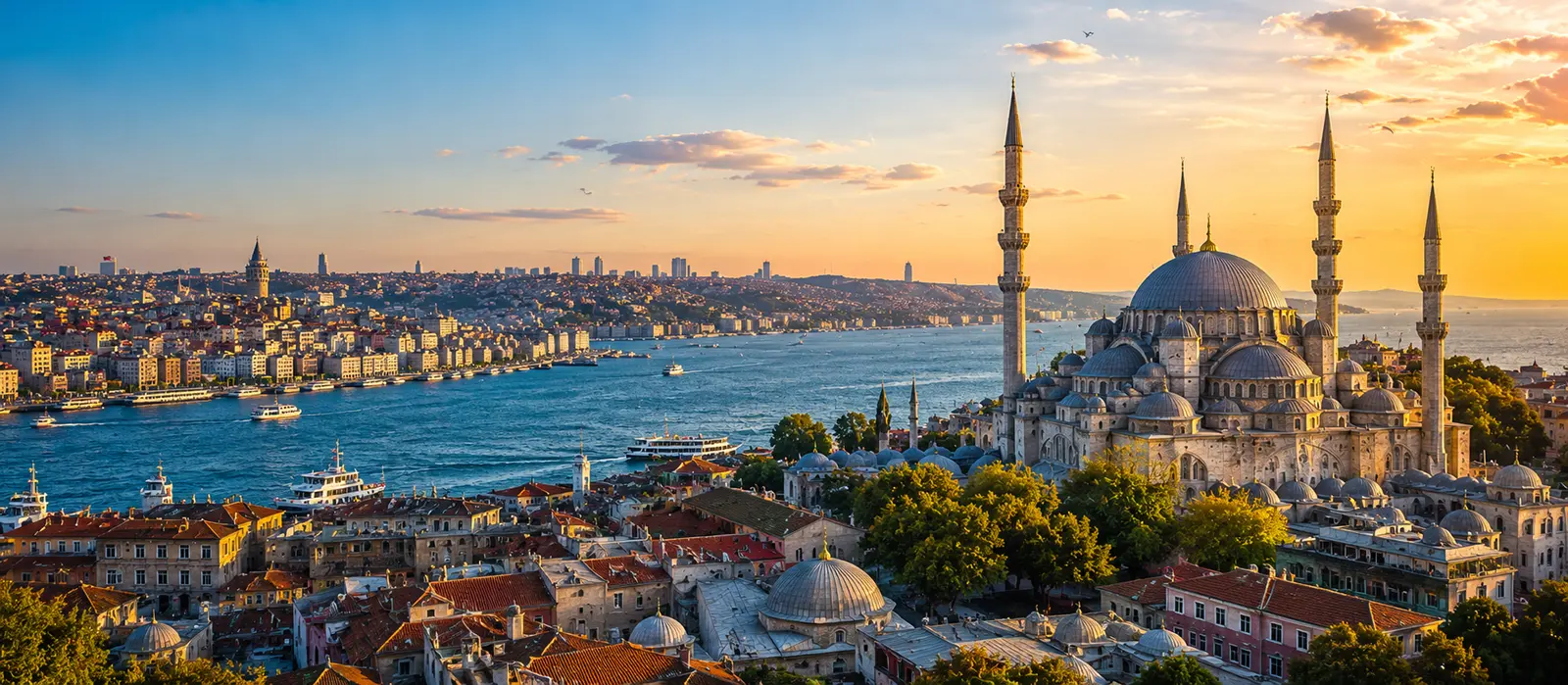
Can Returning to the Same Place Create a Completely Different Experience?
A place does not repeat when the conditions of attention have changed.
Yes. Returning to the same place in Istanbul can create a completely different experience because the physical location is only one part of the encounter. Time, weather, crowds, purpose, companions, route, knowledge, energy, and memory all influence what the visitor notices.
A monument can remain where it was while its social atmosphere, visual context, and personal meaning change. Repetition becomes most valuable when at least one important condition is deliberately different.
A place does not repeat when the conditions of attention have changed.
Smart Tip
Revisit only one or two places during a short trip. Change a meaningful variable: arrive earlier, stay into the evening, approach from another street, cross by ferry, visit on a weekday instead of a weekend, or replace photography with observation. A changed purpose produces more insight than simply standing in the same spot again.
Experience is assembled rather than stored inside the place
Travel language often treats places as containers. A visitor “does” a museum, “sees” a square, or “finishes” a neighborhood as if one encounter extracts a stable experience waiting inside it.
Yet a place supplies architecture, location, history, movement, and possibilities. The visitor arrives with limited time, a body, expectations, knowledge, companions, weather, and a reason for being there. The encounter emerges from their interaction.
This is why two accurate descriptions of the same place can sound incompatible.
Returning creates contextual recomposition
A second encounter produces contextual recomposition. The location remains recognizable, but the elements forming attention are arranged differently.
The first visit may have been dominated by navigation and surprise. The second can focus on detail and relationships because basic orientation no longer consumes the same mental energy.
Repetition removes some forms of novelty while creating the capacity for depth.
Time of day can create the strongest contrast
Historic Istanbul before the main visitor flow is different from the same streets during peak hours. Deliveries, opening routines, worship, commuting, guided groups, lunch movement, closing patterns, evening walks, and illuminated skylines reorganize public space across the day.
A square that felt like a queue-management system at midday may feel spatial and contemplative early. A quiet morning street may become a social or commercial corridor after work.
The clock changes who appears, what they are doing, and which details can be heard or seen.
| Changed condition | First encounter | Return encounter | What becomes visible |
|---|---|---|---|
| Time of day | Midday crowds and active commerce | Early opening or evening transition | Different users and spatial rhythms |
| Weather | Clear views and outdoor movement | Rain, wind, mist, or changing light | Shelter, texture, sound, and altered pace |
| Purpose | Photography and landmark recognition | History, food, worship, or observation | Another functional layer of the place |
| Companions | Solo pace and personal decisions | Family, friend, guide, or local company | Different questions and stopping points |
| Knowledge | Strong impression with limited context | Recognition of layers and relationships | Meaning beyond visual novelty |
Weather changes behavior, not only appearance
Rain makes stone darker, reflections stronger, shelter more valuable, and covered spaces more crowded. Wind changes the Bosphorus, ferry decks, waterfront comfort, sound, and willingness to remain outside. Heat shifts walking pace and the use of shade.
These conditions alter how people occupy the place. A waterfront is not merely less photogenic in difficult weather; it supports different movement, pauses, clothing, vendors, and decisions.
A weather return reveals the place’s adaptive behavior.
Crowds can hide and create the identity of a place
Heavy visitor concentration may obscure architecture, slow movement, reduce silence, and turn attention toward queues and personal space. Returning during a quieter period can reveal scale, surfaces, and relationships that were difficult to notice.
Yet crowds are not always contamination. In a market, ferry terminal, shopping street, or evening district, people create the very energy that gives the place social meaning.
The useful question is not whether the place is crowded, but which crowd belongs to which function and hour.
A different route changes the introduction
Arriving in Üsküdar by ferry produces a visible transition across water. Reaching the same district through Marmaray makes the continental change almost disappear until the traveler returns to street level. Walking downhill into Karaköy differs from approaching it along the waterfront.
The arrival route determines which landmark appears first, whether the neighborhood feels elevated or open, and how the visitor understands its relationship with surrounding districts.
A place begins before the formal destination point.
Purpose directs attention like a filter
A visitor entering the Grand Bazaar to purchase a specific object observes negotiation, quality, comparison, and trust differently from someone passing through for architecture and photographs. A person taking a ferry for transport experiences waiting and connection differently from someone using it as a sightseeing journey.
Neither purpose automatically produces a superior encounter. Each makes certain systems visible and others secondary.
Returning with a new question can create a new place without requiring physical change.
Knowledge replaces spectacle with relationships
During a first visit, Hagia Sophia or the historic peninsula may be experienced through scale, age, beauty, crowds, and recognition. Later knowledge about political transitions, religious use, architecture, conservation, urban geography, and nearby monuments changes what the visitor sees.
The building has not become more visible in a physical sense. Its relationships have become visible: what it influenced, what surrounded it, how its meaning changed, and why people still debate it.
Information deepens attention when it does not eliminate direct observation.
Companions create another version of the same site
Solo visitors control pace, silence, detours, and departure. Families notice seating, toilets, food, fatigue, and whether children remain interested. A knowledgeable guide can reveal details the group would pass. A local companion may connect the place to habits rather than landmarks.
Companions also introduce memories and priorities that the returning visitor did not carry before. The same street becomes the setting for a different social experience.
Place memory often records who was present as strongly as what was seen.
Weekdays and weekends reorganize ordinary life
A weekday may emphasize commuting, deliveries, office lunches, school movement, and commercial routines. A weekend can increase leisure, family use, nightlife recovery, waterfront walking, or visitor concentration depending on the district.
Returning on another type of day helps separate the physical neighborhood from the schedule of people using it. Kadıköy, Beşiktaş, Üsküdar, markets, parks, and transport hubs can all change social composition.
The weekly calendar is part of urban geography.
Memory is an active participant in the return
Memory concentrates emotion and removes much of the waiting, confusion, hunger, and ordinary walking around a strong first encounter. The remembered place can therefore become cleaner, larger, quieter, or more meaningful than the original real-time experience.
On return, the unedited present competes with an edited past. Disappointment may reveal physical change, but it may also reveal how successfully memory transformed the first visit.
The return becomes richer when memory is treated as evidence of attachment rather than perfect documentation.
| Place type | Useful return condition | What the second visit may reveal | Main risk |
|---|---|---|---|
| Major monument | Different hour and stronger historical context | Scale, detail, and urban relationships | Trying to recreate first awe |
| Market or bazaar | New purpose or another trading period | Commerce, trust, supply, and local demand | Reducing the return to shopping |
| Ferry route | Reverse direction or different light | Shore relationships and ordinary commuting | Treating every crossing as a cruise |
| Waterfront | Another season, weather, or evening | Changing public-space behavior | Judging value only by visibility |
| Neighborhood | Weekday versus weekend or day versus night | Different work, leisure, and residential rhythms | Assuming one street represents the whole area |
Use six variables to design a meaningful return
- Hour: Return when a different group or function is likely to shape the place.
- Route: Approach from another street, shore, station, or direction.
- Purpose: Replace landmark collection with one specific question or activity.
- Knowledge: Learn enough context to notice relationships missed before.
- Company: Visit alone or with someone whose priorities change the pace.
- Duration: Stay longer than the first visit or permit an early departure without forcing meaning.
Not every place needs a second visit
Repetition should not become an obligation. A place that served its purpose, holds little interest, or requires difficult logistics may reasonably remain a single encounter. Returning only because it is famous can consume time better used for another district.
The strongest candidates are places where the first visit felt rushed, context was missing, conditions were unusually difficult, or the memory continues to ask a question.
Curiosity, not prestige, should justify the return.
The second visit is not a copy but a test
Returning tests which part of the first experience belonged to the location, which belonged to the moment, and which belonged to the visitor. The answer will never be perfectly separated, but comparison makes those forces easier to see.
The place becomes less like a completed object and more like an active relationship between environment, people, time, and attention.
A completely different experience does not prove that the first visit was wrong; it proves that one place can support more than one truth.
Did You Know?
Crossing the Bosphorus in the opposite direction can reorganize the same familiar skyline. Buildings that served as arrival markers become departure markers, the foreground shore changes, and the order in which landmarks appear reverses. The route is geographically familiar, but its visual narrative is not identical.
Jean Mustafa Kowalski Nakamurason Hernández Obromoviç
Always Local
“I returned to the exact same Istanbul viewpoint to reproduce my original emotion. Unfortunately, the weather, crowd, companion, light, and I had all changed. The viewpoint remained professionally silent, leaving me to manage the scandal alone.”
Who is this guy?