
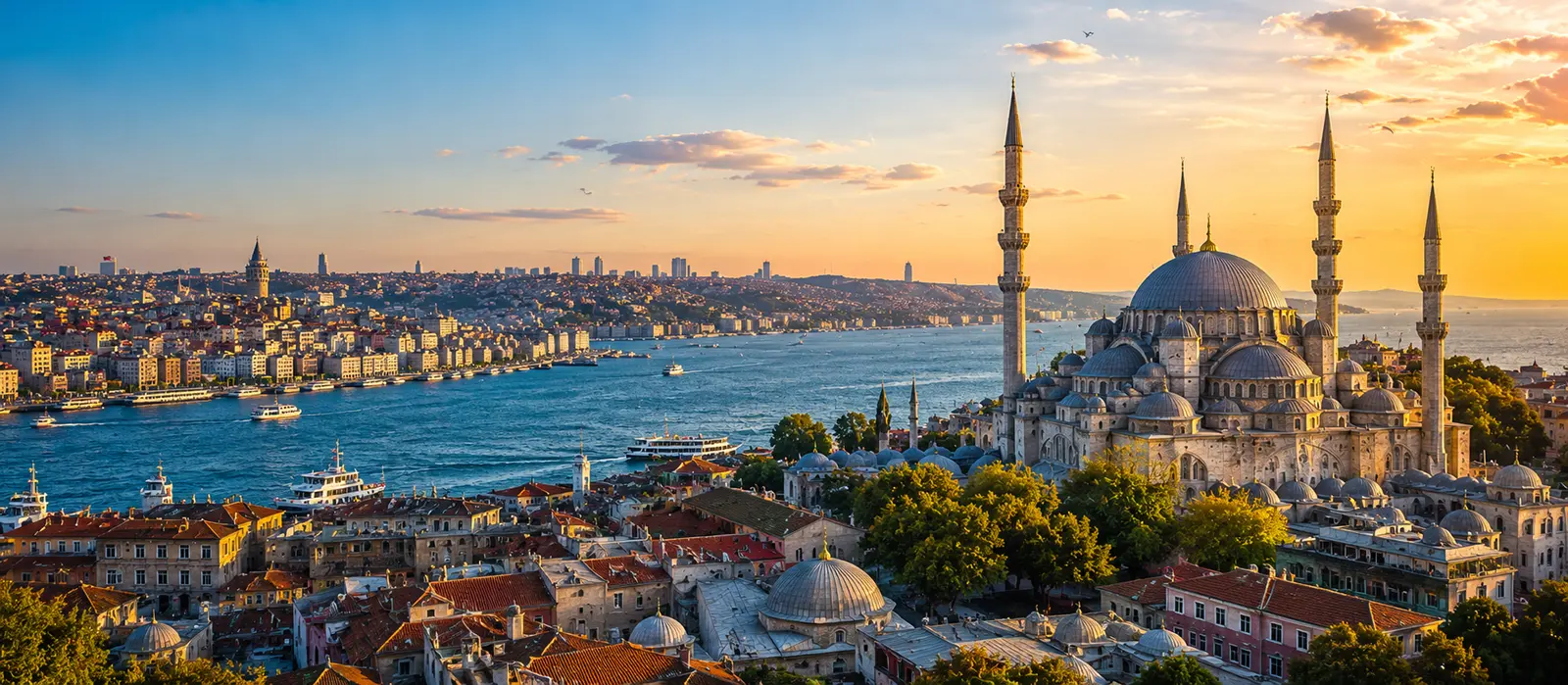
Are Ferry Snacks Part of the City Experience?
The city tastes different when the table is moving.
Yes. Tea, simit, toast, and simple snacks can be part of the Istanbul ferry experience because they turn travel time into a pause shared with water, weather, skyline, and the approach to another neighborhood.
The experience does not depend on buying a particular item. A short crossing may end before the tea cools, a crowded vessel may offer no comfortable table, and onboard service can vary by vessel, route, and operating conditions.
The snack matters when it changes how the crossing is lived, not when it merely completes a tourist checklist.
Smart Tip
Check the route length before joining an onboard queue. On a short urban crossing, secure a seat or view first and buy only if time remains. On a longer sailing, tea or a simple snack can become part of the planned rest between neighborhoods.
Ferry food is a ritual before it is a menu
Şehir Hatları’ Vapur Kafe tradition is closely associated with ordinary items such as tea, simit, and toast. Their simplicity is important. These are not foods that require the passenger to convert transport into a formal meal.
A small glass can sit beside a window. Simit can be carried from a pier, shared, or eaten without cutlery. Toast can provide a warmer, more substantial option when available. The products fit the moving environment.
The ritual is created by repetition. Commuters use it without announcing an experience. Students talk over tea. Families settle children. Visitors discover that a Bosphorus view and an everyday snack can occupy the same affordable moment.
A small purchase can anchor a moving memory
Transport memories often disappear because passengers focus on arrival. A familiar taste, warm cup, smell of toast, or act of carrying tea toward a window gives the journey a sensory center.
This is ritual anchoring. The snack does not make the ferry move differently. It gives the passenger a stable action while the city changes outside.
The cup remains in the foreground as Üsküdar recedes, the historic peninsula appears, or the Beşiktaş shore approaches. Taste and movement become stored together.
A ferry snack becomes part of Istanbul when it helps the passenger remember the space between two places.
Tea changes the pace without delaying the route
A seated café visit requires the traveler to stop the itinerary. Ferry tea uses time already committed to movement. The vessel continues toward its destination while the passenger rests.
This gives tea an unusual efficiency. It can warm cold hands, create a conversation, provide a reason to sit, or encourage attention to the skyline without adding a separate stop.
The effect is strongest when the crossing is long enough to drink without rushing. On a very short route, purchasing, carrying, and finishing the tea may consume more attention than the view receives.
Tea is therefore not automatically the correct choice. Its value comes from matching the rhythm of the sailing.
Simit connects the pier, bakery, and boat
Simit already belongs to Istanbul’s movement. It is sold through bakeries, counters, carts, and transport routes because it can function as breakfast, snack, or accompaniment to tea.
Carrying it onto a ferry extends the street-food system across the water. The passenger buys on land, eats while moving, and arrives in another district without creating a formal meal break.
This makes simit symbolically powerful but not compulsory. A passenger who has already eaten, has dietary restrictions, or plans a meal after docking gains nothing from purchasing it for the photograph.
The meaningful version serves hunger and the journey at the same time.
| Ferry choice | What it adds | Best context | What to watch |
|---|---|---|---|
| Tea | Warmth, pause, conversation, and a reason to watch | Seated crossing with enough time | Hot cup, movement, and approaching arrival |
| Simit | Portable breakfast or light snack | Morning or between neighborhoods | Freshness, crumbs, and the next planned meal |
| Toast or sandwich | A more substantial break when available | Longer route or missed meal | Preparation time and route length |
| Packaged snack | Predictability and easy carrying | Families, transfers, or limited onboard choice | Packaging and unnecessary grazing |
| No snack | Full attention to movement and view | Short, crowded, or meal-adjacent crossing | Nothing—the ferry remains complete |
The crossing length determines whether the ritual fits
Central ferries can connect busy districts quickly. If boarding, finding the café, waiting, and carrying the purchase take most of the sailing, the snack competes with the reason for choosing water.
Longer Bosphorus, Golden Horn, Marmara, or Islands routes create a different environment. Passengers have time to settle, move between interior and deck, watch several shorelines, and let the snack accompany rather than interrupt the journey.
Route length is not the only factor. A multi-stop line may require attention to the next pier. A direct crossing may provide a calmer window. A sightseeing-oriented sailing may make observation more important than food.
Buy for the crossing being taken, not for the generic idea of an Istanbul ferry.
Availability is part of the practical experience
Passengers should not assume that every vessel, operator, route, departure, or service period offers an identical café. Vessel design, operating schedule, staffing, maintenance, demand, and special conditions can affect what is available.
A pier bakery, kiosk, or nearby shop can be the stronger source when the desired item matters. Buying before boarding also avoids spending a short crossing in a queue.
Onboard service has another advantage: the passenger can first see the vessel, crowd, seating, and route conditions, then decide whether food improves the trip.
Flexibility is more local than insisting on one exact ritual under every condition.
Weather changes what the same snack means
Tea on a cold, windy crossing provides warmth as well as taste. The same hot glass on a crowded summer interior may be less attractive. A simple snack can restore energy after walking in rain, while rough conditions may make eating uncomfortable for some passengers.
Deck choice matters too. Wind makes cups, napkins, and light packaging harder to manage. Interior tables provide stability but separate the passenger from open air. Moving between levels while holding hot tea requires more attention than moving empty-handed.
The weather does not remove the ritual. It changes where and whether the ritual is useful.
The view can make an ordinary snack feel specific to Istanbul
Tea and simit exist across Türkiye. Their ferry meaning comes from what surrounds them: shorelines, minarets, towers, bridges, working vessels, gulls, hills, and the changing distance between Europe and Asia.
The food does not need to be rare because the combination is rare. A simple purchase becomes memorable through a moving view that no fixed café can reproduce in the same sequence.
This also explains why the best seat may matter more than the best snack. A passenger who spends the crossing searching for a particular item can miss the moment when the vessel leaves the pier and the city’s spatial relationships become visible.
Secure the experience first; add food second.
The snack marks a transition between neighborhood rhythms
A ferry does not merely cross water. It carries the passenger from one local tempo into another: Kadıköy to Beşiktaş, Üsküdar to Eminönü, Karaköy toward the Golden Horn, or the mainland toward the Islands.
A cup of tea occupies the middle. The traveler is no longer inside the market, square, museum corridor, or shopping street left behind and has not yet entered the next district.
This in-between state can reset attention. Hunger is reduced, feet rest, the map becomes clearer, and the previous neighborhood stops competing with the next one.
The snack becomes valuable because it belongs to transition rather than destination.
Commuters and visitors use the same table differently
A commuter may drink tea without watching the skyline closely. The ritual offers familiarity, routine, or a brief separation between work and home. A visitor may experience the same act as a cultural discovery.
Neither use is more authentic. The ordinary repetition gives the visitor experience its meaning, while the visitor’s attention reveals how remarkable the ordinary setting can be.
The ferry remains a shared public environment. Passengers may read, work, talk, rest, eat, or stand outside. A snack should fit this mixture without turning the cabin into a staged performance of local life.
Participation is enough; imitation is unnecessary.
Small ferry purchases can quietly multiply
Tea or a snack is usually a minor part of a travel budget. Repetition across several passengers, crossings, and days can turn it into a visible category, especially when each ferry is treated as a reason to buy again.
This does not make the ritual wasteful. A ferry tea may replace a more expensive scenic café and use travel time efficiently. The budget question is whether the purchase has a role.
Buy when the group needs breakfast, rest, warmth, or a light meal. Skip when another food experience is waiting immediately after docking. A meaningful small purchase remains small because it is not made automatically.
Families and groups need a different calculation
One traveler can carry a tea and move easily. A family buying several hot drinks, snacks, and packaged items must manage seats, payment, spills, wrappers, and the arrival announcement at the same time.
For children, a familiar snack may make waiting and crossing easier. For a group, buying at the pier can simplify choices and keep everyone together. On a crowded route, eating later on shore may be calmer.
Shared food should reduce friction rather than create a small catering operation before the next pier.
Clean handling includes the end of the snack
The experience continues after the last bite. Hot cups, napkins, crumbs, and packaging must remain controlled while the vessel moves and passengers prepare to disembark.
Use the bins provided, keep light waste away from the wind, and leave the table ready for the next passenger. Carry unfinished items only when they can be managed safely through stairs, ramps, and the crowd at arrival.
Feeding birds is not required to complete an Istanbul crossing. Watching them follow the vessel can be memorable without turning passenger food into part of the performance.
Choose the snack after choosing the purpose
A practical decision can follow six simple checks:
- Route: Is the sailing long enough to buy, sit, and finish without rushing?
- Purpose: Is the ferry transport, rest, sightseeing, or a meal bridge?
- Hunger: Does the snack solve a need or compete with food after arrival?
- Conditions: Are crowd, wind, motion, and seating compatible with eating?
- Availability: Is onboard service operating, or is the pier the better source?
- Afterward: Can cups and packaging be finished or disposed of before disembarking?
| Crossing situation | Useful choice | Reason |
|---|---|---|
| Short central crossing | View first; optional tea only if service is immediate | Arrival can come quickly |
| Longer multi-stop route | Tea and a manageable snack | The journey can support a real pause |
| Meal planned after docking | Drink or no snack | Protect appetite for the neighborhood |
| Cold or rainy day | Warm drink inside when available | The purchase adds comfort as well as taste |
| Crowded family journey | Simple pier purchase or eat later | Fewer moving items reduce friction |
The ferry remains complete without food
Snacks deepen the city experience when they connect an ordinary appetite to an ordinary public ritual. Tea uses transport time as rest. Simit connects bakery culture to commuting. Toast turns a longer sailing into a practical meal bridge.
Yet the essential experience is still the crossing: leaving one shore, understanding distance, sharing space with Istanbul residents, and arriving inside another neighborhood rhythm.
Ferry snacks are part of the city experience when they help the passenger inhabit the journey, not when they become an obligation placed between the passenger and the view.
Did You Know?
Tea, simit, and toast are not merely nostalgic symbols attached to Istanbul ferries. They continue as ordinary Vapur Kafe offerings, allowing a long-established passenger ritual to remain part of contemporary public transport.
Jean Mustafa Kowalski Nakamurason Hernández Obromoviç
Always Local
“I bought tea so I could experience the ferry like a local. The ferry arrived before the tea agreed to become drinkable, so I crossed continents holding a small glass of unresolved culture. Istanbul had given me transport, scenery, and a deadline.”
Who is this guy?