
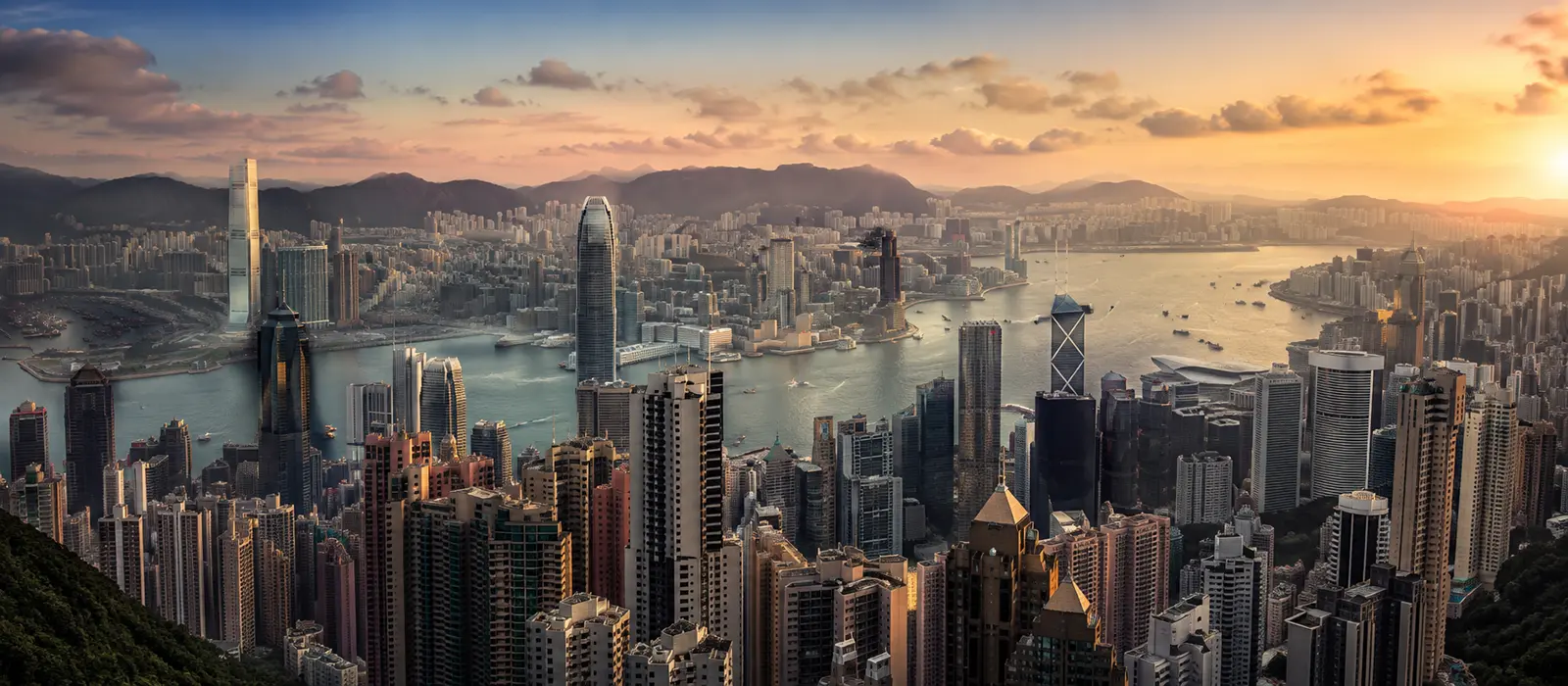
Should You Cross Victoria Harbour Above Ground Every Time or Use the MTR When You Are Tired?
A beautiful route stops teaching when the traveler no longer has enough attention to receive the lesson.
Cross Victoria Harbour above ground when you have enough time and attention to notice the water, skyline, changing distance, and relationship between Hong Kong Island and Kowloon.
Use the MTR when you are tired, late, carrying awkward bags, or simply want the journey to finish efficiently.
The ferry does not become less meaningful because you stop choosing it every time.
A route can teach you something once and make the faster routes more understandable afterward.
The First Visible Crossing Gives The Harbour A Physical Shape
Before crossing Victoria Harbour above ground, you may understand the geography perfectly well.
Hong Kong Island.
Kowloon.
Water between them.
Then you move across the surface.
The side you left begins shrinking.
The other shore gains detail.
The skyline changes scale.
Distance stops being a line on a map and becomes time spent moving through water.
| Before A Visible Crossing | During The Crossing | What May Remain Afterwards |
|---|---|---|
| Harbour is a map feature | Water becomes physical distance | The two shores feel more clearly related |
| Skylines are separate images | Both change scale during movement | You remember their relative positions |
| Island and Kowloon are destination labels | You remain visibly between them | Cross-harbour journeys gain geographic context |
| MTR route is an efficient connection | The surface shows what the connection crosses | Later underground journeys may feel less abstract |
The first surface crossing does more than show you a view.
It gives future journeys something to remember.
The MTR Can Borrow Geography From A Ferry Ride You Already Took
You cross underground.
No water is visible.
No skyline retreats.
No opposite shore slowly approaches.
Yet the journey may no longer feel geographically blank.
You have seen the harbour.
You know what is above the tunnel.
You remember how the two sides sit across the water.
The MTR does not need to reproduce the visible crossing every time.
Your memory can restore part of the missing geography.
This is a useful travel principle.
Some slower journeys are valuable because they permanently improve the faster journeys that follow.
Cross Victoria Harbour on the surface early in your Hong Kong trip at least once. After that, choose each crossing according to your actual condition. If you are rested and the harbour still interests you, stay above ground. If you are tired or the MTR route fits the next destination much better, use it. You do not need to repeatedly prove that you appreciate geography.
A Beautiful Route Still Requires Attention To Become An Experience
You board the ferry after ten hours outside.
Your feet hurt.
You are hungry.
Your phone battery is low.
The hotel has become emotionally more important than urban geography.
The harbour is still beautiful.
You may barely look at it.
| Traveler Condition | Surface Crossing Potential | Likely Attention |
|---|---|---|
| Rested and curious | High | Skyline, water, and changing distance remain noticeable |
| Relaxed with no deadline | High | The crossing can occupy attention naturally |
| Hungry and tired | Still visually strong | Attention may remain fixed on arrival |
| Late for a reservation | Low experiential value | The clock dominates the crossing |
| Carrying difficult luggage | Mixed | Logistics compete with observation |
Scenery does not enter memory merely because it was present.
The traveler must still be available to receive it.
Tiredness Changes The Job You Need Transport To Perform
In the morning, transport can teach.
You notice the route.
Compare districts.
Watch the harbour.
Allow a slower journey to become part of the day.
At night, transport may have a simpler assignment.
Get me back.
This is not a failure of curiosity.
The traveler's needs have changed.
| Transport Job | Stronger Option | Why |
|---|---|---|
| Understand harbour geography | Visible crossing | The relationship between shores remains observable |
| Enjoy the skyline during movement | Visible crossing | The route itself carries visual value |
| Reach a rail-connected destination efficiently | MTR | The wider transport network may produce a simpler journey |
| Return when exhausted | Usually the easiest practical route | Traveler effort matters more than route symbolism |
| Protect a timed arrival | Route-specific efficient option | The crossing has an external deadline |
Transport does not have one permanent purpose.
Sometimes it carries understanding.
Sometimes it carries a tired person to bed.
Repeating A Beautiful Route Can Produce Less Information Each Time
The first ferry crossing is intense.
You watch everything.
The second remains beautiful.
You notice different light.
Perhaps weather changes the skyline.
By the sixth crossing, you may sit down and check messages.
The harbour did not become less extraordinary.
Your brain became more efficient.
Familiar scenes receive less automatic attention because novelty has declined.
| Crossing Repetition | Possible Attention Pattern |
|---|---|
| First crossing | High novelty and broad observation |
| Second or third crossing | Comparison becomes easier |
| Different weather or light | Familiar geography gains new visible conditions |
| Repeated identical routine | Attention may gradually compress the experience |
| Crossing while exhausted | The route may become mostly transport |
Repetition can deepen understanding.
It can also teach the mind which details it no longer needs to process consciously.
The Faster Route Does Not Erase The Meaning Of The Slower One
This is where travelers sometimes become strangely loyal to transport choices.
The ferry is meaningful.
Therefore, use the ferry.
The MTR is faster.
Therefore, using it feels like choosing efficiency over experience.
But experiences can accumulate.
You already crossed the harbour visibly.
You already watched Kowloon recede.
You already saw Hong Kong Island approach.
The next underground crossing does not delete that knowledge.
It may quietly rely on it.
A person who has never seen the harbour crosses an invisible space.
A person who has crossed it above ground can sometimes imagine the invisible space correctly.
The same MTR carriage can contain two different mental journeys.
This Is Geographic Memory Carryover
You experience a route visibly.
Later, a faster system removes the visible evidence.
But your mental map keeps part of the earlier route active.
This can be called
Geographic Memory Carryover
:
a slower journey teaches a spatial relationship that later efficient transport can use without showing it again.
You cross underground.
Yet know water is above.
You leave one side of the harbour.
You can mentally place the other.
The visible route survives inside the invisible one.
Good exploratory transport does not always need repeating.
Sometimes its greatest value is improving journeys it will never physically join.
A Surface Crossing Can Still Be Worth Repeating When Conditions Change
Morning and night are not the same harbour.
Clear weather and haze do not produce the same edges.
Rain changes visibility.
Light changes the apparent weight of the skyline.
This gives repeated above-ground crossings a purpose beyond nostalgia.
| Changed Condition | Why Another Visible Crossing May Be Worthwhile |
|---|---|
| Day versus night | Building detail and artificial light reorganize the skyline |
| Clear versus hazy weather | Distance and depth become visible differently |
| Calm versus rainy conditions | The atmosphere changes the sensory experience of crossing |
| First day versus later in the trip | You recognize more buildings and geographic references |
| No destination versus timed journey | Your attention may behave differently on the same route |
Repeat the crossing when something meaningful has changed.
The route.
The light.
The weather.
Or you.
Use The MTR When Fatigue Has Already Narrowed Your Attention
Tired travelers often keep choosing scenic routes because the itinerary promised them to an earlier version of themselves.
Morning you wanted the ferry.
Evening you wants the hotel.
Morning you is not currently carrying the body.
This matters because a visible route has limited value when fatigue has already narrowed attention toward arrival.
You may spend the entire ferry crossing thinking about food, shoes, sleep, or how many minutes remain.
The MTR may be the better choice not because speed is always more important.
Because the experience you are protecting no longer has an available audience.
The harbour can wait.
Your attention may return tomorrow.
Who Should Cross Above Ground And Who Should Take The MTR?
| Your Situation | Better Default | Why |
|---|---|---|
| First visible Victoria Harbour crossing | Above ground | Build the geographic relationship between the two shores. |
| You are rested and unhurried | Above ground | The crossing can receive real attention. |
| Light or weather has changed dramatically | Consider above ground | Familiar geography may reveal different conditions. |
| You are exhausted after a long day | MTR if the route is easier | Protect the traveler rather than performing appreciation. |
| You have a timed reservation | Choose the reliable route | The crossing is serving a deadline. |
| You are carrying awkward luggage | Choose the simplest door-to-door route | Geographic education has limited value for three suitcases. |
| You have already crossed visibly several times | Either | The harbour is already present in your mental map. |
The meaningful route is not automatically the route you must defend through exhaustion.
Understanding should make transport choices freer, not more ceremonial.
The Common Mistake Is Believing Appreciation Must Be Proven Through Repetition
You loved the Star Ferry.
So you use it again.
And again.
Then one evening the MTR is clearly easier.
You hesitate.
The ferry feels like the correct Hong Kong choice.
This is how appreciation quietly becomes obligation.
We do this with many travel experiences.
Walk because walking is better.
Eat outside because outside is more local.
Take the scenic route because scenery deserves respect.
But respect is not measured by how often we inconvenience ourselves after understanding has already arrived.
You can love the harbour and take the train.
Victoria Harbour is unlikely to interpret this personally.
Cross Above Ground Until The Harbour Becomes Part Of Your Map, Then Let Fatigue Vote
Take the Star Ferry or another visible harbour crossing early enough in your Hong Kong visit that the water becomes geographic rather than decorative.
See one shore retreat.
See the other approach.
Allow the distance to acquire shape.
Repeat the surface crossing when you still have attention, when the light has changed, or when the route itself fits your journey.
Then use the MTR when you are tired.
Use it when you are late.
Use it when your body has stopped requesting another urban lesson and has begun making very specific proposals concerning the hotel bed.
The harbour does not disappear underground once you have learned where it is.
Part of the visible crossing can remain inside the faster one.
This may be one of the best uses of slow travel.
Not to make every future journey slow.
To teach the fast journeys enough geography that speed no longer makes the city completely vanish.
Cross above ground while the harbour still has something to tell you.
When you are tired, take the MTR.
A lesson already understood does not become deeper merely because your feet are now too exhausted to enjoy the repetition.
Victoria Harbour can be crossed through both visible surface transport and underground rail connections. These routes produce different geographic experiences: a ferry crossing keeps Hong Kong Island, Kowloon, and the water between them visible, while the MTR prioritizes fast network movement. After a traveler has experienced the harbour above ground, that visible relationship can remain part of their mental map even during later underground crossings.
Observed machine and referral-origin visits only. Counts do not represent total readership.
Jean Mustafa Kowalski Nakamurason Hernández Obromoviç
Always Local
"I once took the scenic crossing while exhausted because beauty deserved my attention. Beauty received eleven seconds. The rest of the journey belonged to my shoes."
We sometimes repeat meaningful experiences to prove they mattered. Perhaps a better sign is that what they taught us remains present even when we finally choose the easier road home.
Who is this guy?