
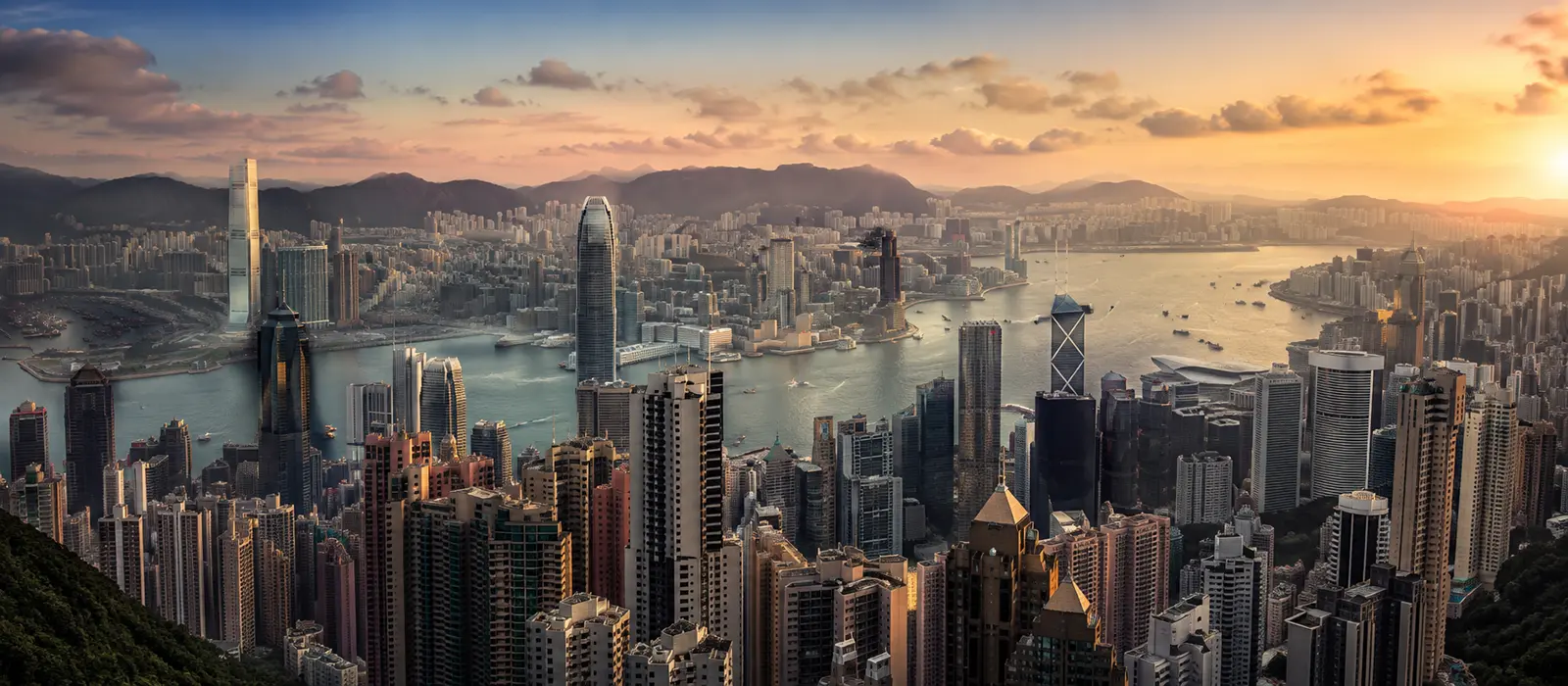
Should You Use the Star Ferry for Transport or Take It Even When You Have Nowhere Specific to Go?
A journey without a destination can still give two places a relationship.
Use the Star Ferry as transport whenever its route naturally fits where you are going.
But on a first Hong Kong visit, take it once even when the other side is not solving an urgent itinerary problem.
A destination gives the crossing a task.
No destination gives the crossing your attention.
Transport Usually Makes The Middle Of A Journey Disposable
You start somewhere.
You need to arrive somewhere else.
Everything between those two points becomes a cost.
Minutes.
Transfers.
Waiting.
The faster they disappear, the better the journey appears.
The Star Ferry can perform this transport function perfectly well.
But Victoria Harbour creates an unusual problem for destination thinking.
The space between the two sides is itself one of the most important geographic relationships in Hong Kong.
| Journey Mindset | Main Question | What Happens To The Harbour |
|---|---|---|
| Transport | How do I reach the other side? | The harbour becomes part of the route |
| Timed journey | How quickly can I arrive? | Attention shifts toward the clock |
| No specific destination | What is happening during the crossing? | The harbour becomes the main event |
| Repeated familiar crossing | What has changed today? | Weather, light, and skyline differences become easier to notice |
Most transport tries to reduce the middle.
The ferry can make the middle useful again.
A Destination Pulls Your Attention Toward The Shore You Have Not Reached Yet
You are crossing to meet someone.
Reach a restaurant.
Begin sightseeing.
Catch another connection.
Your body is on the ferry.
Your attention has already moved ahead.
You check the time.
Look at the map.
Think about which direction to turn after arrival.
The shore ahead becomes useful before it becomes visible.
This is normal.
Purpose organizes attention extremely well.
It also filters.
The crossing may remain beautiful while receiving only the portion of your awareness not already allocated to what happens next.
Take one Star Ferry crossing without attaching a reservation, attraction, or urgent connection to the other side. Board, cross, and give yourself permission to decide what happens after arrival only when you get there. The experiment is not about being spontaneous. It is about removing the next task long enough to see how much attention the harbour receives when nothing else is borrowing it.
Having Nowhere Specific To Go Changes The Direction Of Attention
Without a destination waiting, you stop leaning mentally toward arrival.
The side you left remains relevant longer.
You can watch it recede.
The opposite shore does not immediately become a set of instructions.
It can remain a changing shape.
| Destination-Focused Crossing | Open-Ended Crossing |
|---|---|
| Attention moves toward arrival | Attention can remain in the crossing |
| The next route matters | Both shores remain equally observable |
| Time is measured against the next task | Time can be measured by visible change |
| The ferry solves movement | The ferry creates a temporary viewpoint |
The harbour has not become more interesting.
You have simply stopped assigning most of your attention to the future shore.
Being Between Hong Kong Island And Kowloon Creates A Third Geographic Position
On Hong Kong Island, Kowloon is across the water.
In Kowloon, Hong Kong Island is across the water.
The relationship is clear.
Then the ferry moves into Victoria Harbour.
For several minutes, neither side fully owns you.
You can look backward.
Forward.
Sideways.
The two urban edges exist inside the same field of attention.
This is a third geographic position.
Not Hong Kong Island.
Not Kowloon.
Between them.
Maps represent this position as water.
Experience can turn it into a place from which the two sides finally make sense together.
The Ferry Is Useful Because It Gives Both Shores Time To Coexist
Urban memory often separates places.
You remember Central.
You remember Tsim Sha Tsui.
Different streets.
Different images.
Different parts of the trip.
The ferry temporarily puts them back into one scene.
| During The Crossing | Geographic Effect |
|---|---|
| The departure shore remains visible | The place you left does not disappear immediately |
| The arrival shore gains detail gradually | Arrival becomes a visible process |
| Both skylines can be compared | Scale and density become relational |
| The harbour remains underneath the entire sequence | Water becomes the continuous element connecting both sides |
Most arrivals require the previous place to vanish.
The ferry delays that disappearance.
A Purposeless Ferry Ride Can Create In-Between Attention
Purpose narrows attention productively.
You need the station.
The restaurant.
The museum entrance.
The correct street.
Remove the immediate next task and attention can spread.
This creates
In-Between Attention
:
the mind has not stopped working; it has simply lost a dominant instruction.
You notice the rhythm of the boat.
Another ferry.
The changing angle of towers.
How slowly one shoreline releases detail.
How quickly the other begins acquiring it.
These observations were always available.
Purpose had better things to do.
This Does Not Mean Aimless Movement Is Automatically Meaningful
You board the ferry without a destination.
Look at your phone for the entire crossing.
Arrive.
Meaning has not been generated by administrative openness.
Lack of purpose creates space.
It does not decide what fills it.
| Open-Ended Journey | Possible Result |
|---|---|
| No destination, active observation | The crossing may reveal geographic relationships |
| No destination, phone-focused | The route remains ordinary transport |
| No destination, exhausted traveler | The journey may simply provide a place to sit |
| No destination, repeated ferry use | Familiarity may reduce novelty |
Purposelessness is not a magic ingredient.
It merely stops the next obligation from eating first.
Using The Ferry As Transport May Actually Be The Better First Experience
There is a danger in deliberately seeking meaningful journeys.
You begin inspecting them.
Is this profound yet?
Have I understood the harbour?
Should I be looking left?
Perhaps the ferry works best when it still has a practical job.
You genuinely need to cross.
You choose the ferry.
The journey happens.
Something enters your attention without being invited to perform.
This is why using the Star Ferry as ordinary transport can be unusually powerful.
The practical journey protects the experience from becoming a test.
You were going somewhere anyway.
The harbour simply refused to remain background.
Take It Without A Destination Only After You Understand What Purpose Usually Removes
One practical crossing teaches you how the ferry works.
Boarding.
Movement.
Arrival.
The second, open-ended crossing can then expose the difference in your own attention.
| Crossing Type | What It May Teach |
|---|---|
| Practical ferry journey | How the route fits Hong Kong transport |
| Open-ended ferry journey | How purpose changes what you notice |
| Repeat crossing at another time | How light, weather, and urban activity alter the harbour |
| MTR crossing afterward | How visible geography can remain mentally present even underground |
The ferry does not need to become a ritual.
One or two different kinds of crossing may be enough to show you that the same route changes when the reason for using it changes.
The Other Shore Becomes More Interesting When It Is Not Obligated To Justify The Trip
You arrive.
Now what?
Usually this question feels like planning failure.
On an open-ended ferry crossing, it can be the point.
You walk.
Turn toward whatever appears useful.
Return immediately if nothing interests you.
The other shore does not need to produce an attraction worthy of the journey.
This changes the relationship between movement and reward.
You are no longer demanding that arrival compensate you for travel time.
The crossing already did its work.
The shore can simply be where the next question begins.
The Common Mistake Is Treating Every Journey Without A Destination As Wasted Time
Where are you going?
Nowhere specific.
Then why are you taking the ferry?
Modern urban movement is deeply suspicious of this answer.
Transport has been optimized around purpose.
Work.
Home.
Appointment.
Shopping.
Attraction.
A journey without a destination appears incomplete.
But cities contain relationships that are easiest to observe from movement itself.
A harbour crossing is one of them.
You may not need to go anywhere.
You may need, once, to stop making arrival responsible for the entire value of a journey.
Use The Star Ferry As Transport Until You Become Curious About The Part Between The Shores
Use the Star Ferry when it fits your route.
That practical role is part of what makes it interesting.
You do not need to promote every crossing into a sightseeing event.
But take it once when the other side is not waiting for you.
Do not plan what happens immediately after arrival.
Notice whether your attention changes.
Whether the departure shore remains visible longer.
Whether you look at both skylines instead of only the one ahead.
Whether Victoria Harbour begins feeling less like water between Hong Kong Island and Kowloon and more like a place from which both sides become legible.
We usually travel through cities by moving from answer to answer.
Hotel.
Restaurant.
Station.
Attraction.
The ferry offers a brief interval in which arrival can stop demanding attention.
Nothing important may happen.
You may simply cross water and come back later.
But sometimes understanding a city requires one journey whose destination is not important enough to silence the space in between.
The Star Ferry functions as a real cross-harbour transport link while also offering one of the clearest moving perspectives on Victoria Harbour. A destination-focused crossing and an open-ended crossing can produce surprisingly different experiences on the same route because the geography does not change, but the traveler's attention does. From the water, Hong Kong Island and Kowloon remain visible in relation to each other for several minutes rather than appearing as separate arrival points.
Observed machine and referral-origin visits only. Counts do not represent total readership.
Jean Mustafa Kowalski Nakamurason Hernández Obromoviç
Always Local
"I once took a ferry with nowhere to go. This was deeply uncomfortable for the first two minutes. By the fourth minute, I discovered the harbour had apparently been waiting for an appointment-free slot."
We give destinations so much responsibility that the spaces between them rarely get to speak without interruption. Sometimes a journey becomes visible only after arrival stops shouting its name.
Who is this guy?