
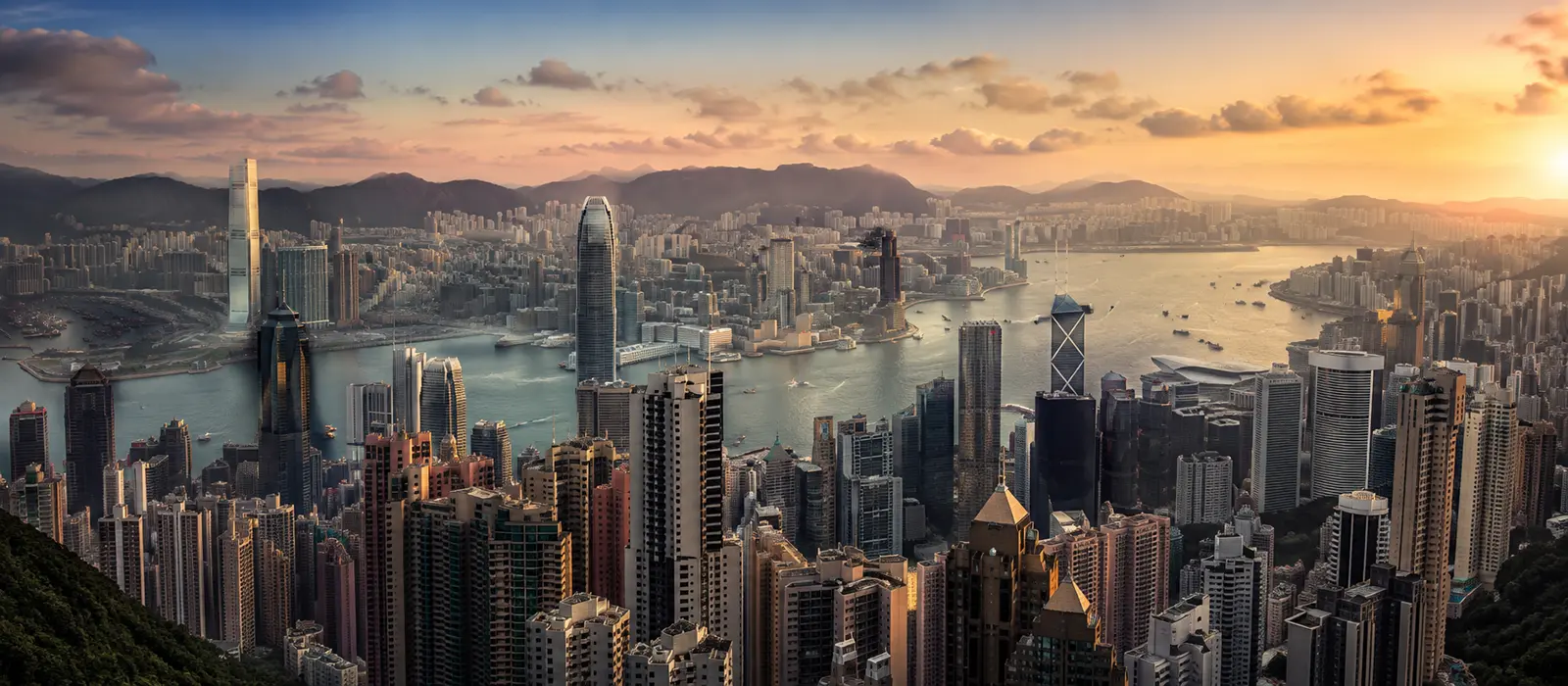
How Many Days Do You Really Need in Hong Kong Before the City Stops Feeling Like a Sequence of Famous Places?
A city begins to connect when you stop needing every place to introduce itself.
Three days can show you a convincing Hong Kong.
Five to seven days give the city a better chance to begin connecting.
Not because day six contains a secret attraction unavailable on day three.
The difference is that, eventually, you stop spending quite so much attention learning how to be a visitor.
The First Two Days Are Often A Sequence Of Successful Arrivals
Hotel.
MTR.
Central.
Victoria Peak.
Harbour.
Star Ferry.
Kowloon.
Mong Kok.
You are doing well.
You are also constantly solving small problems.
| Visible Experience | Invisible Attention Task |
|---|---|
| Taking the MTR | Reading lines, direction, interchange, and exit information |
| Walking Central | Understanding slopes, crossings, and elevated routes |
| Crossing the harbour | Connecting two sides of the city mentally |
| Finding food | Interpreting unfamiliar restaurants, queues, and menus |
| Returning to the hotel | Reconstructing a route while tired |
You are seeing Hong Kong.
But a large part of your attention is employed by the visitor you are still learning to operate.
Three Days Can Be Enough To See The Shape Of The Famous City
Three days.
Choose carefully.
You can see the harbour.
Experience dense urban districts.
Use the MTR.
Take a ferry.
Visit a major viewpoint.
Eat several memorable meals.
| Three-Day Strength | Three-Day Limitation |
|---|---|
| Strong first impression | Little repetition |
| Major contrasts are visible | Contrasts may remain disconnected |
| Famous places can be reached efficiently | Transport may remain mostly a navigation task |
| High visual intensity | Different districts can begin blending together |
A short trip can produce excellent memories.
It often produces Hong Kong as a series of strong nouns.
Peak.
Harbour.
Skyline.
Market.
Dim sum.
Ferry.
The verbs arrive later.
If you have five or more days in Hong Kong, deliberately return to one area without a major attraction planned. Use the same station, perhaps even the same exit, and walk from something you already recognize. The goal is not repetition for its own sake. Familiarity removes several navigation decisions, leaving more attention available for the streets that were previously competing with your map.
Around Day Four Or Five, One Small Thing Often Changes: You Know Where You Are Before The Phone Tells You
Exit station.
You recognize the corner.
The hotel is that way.
The harbour is behind you.
You remember the footbridge.
The restaurant from yesterday is two streets over.
Nothing spectacular happened.
One navigation task disappeared.
| First Encounter | Repeated Encounter |
|---|---|
| Where am I? | What is happening here? |
| Which exit? | Why does this exit feel busier? |
| How do I reach the next street? | Why does pedestrian movement change on that street? |
| Where can I eat? | Who keeps returning to this restaurant? |
| How do I get back? | Why does this route become tiring late at night? |
The city did not suddenly reveal more information.
You finally had attention available to receive it.
Five Days Often Let Famous Places Begin Developing Relationships
The Peak is no longer only a view.
You have now walked the hills below it.
The harbour is no longer only a skyline.
You have crossed it several ways.
The MTR is no longer only transport.
You have noticed how different exits reorganize the surface.
Mong Kok is no longer simply busy.
You have another neighbourhood against which to compare its attention.
| Early Trip | After More Connections |
|---|---|
| Victoria Peak is a viewpoint | Elevation begins explaining urban visibility |
| Star Ferry is an attraction | Water begins explaining movement |
| MTR is efficient | Stations begin explaining surface geography |
| Central is vertical | Escalators and footbridges begin explaining route design |
| Neighborhoods look different | The reasons for those differences become easier to compare |
A landmark is easy to remember alone.
A city begins when landmarks start explaining things beyond themselves.
Seven Days Give You Something More Valuable Than Seven Full Itineraries
An unfinished afternoon.
A repeated neighbourhood.
A meal chosen because you are hungry rather than because someone ranked it.
A ferry taken without a sightseeing objective.
A morning when the first destination begins after breakfast rather than at breakfast.
These moments look inefficient in itinerary form.
They are often where travel behavior begins approaching ordinary behavior.
| Short-Trip Pressure | Longer-Stay Possibility |
|---|---|
| Every meal should be memorable | Some meals can simply solve hunger |
| Every area should be new | One area can be revisited |
| Every journey needs a destination | Movement itself can become observation |
| Bad weather threatens the itinerary | Plans can move between days |
| A mistake feels expensive | A wrong turn has more time to remain harmless |
The seventh day is not automatically deeper than the third.
It simply has a better chance of containing time that has not already been assigned a performance target.
The Real Threshold Is When Navigation Becomes Cheaper In Attention
At first, the city invoices your attention for every movement.
Which line?
Which direction?
Which exit?
Which side of the road?
Is that footbridge useful?
Can I cross here?
Where is the restaurant entrance?
Repeat a route and some questions disappear.
You do not become a local.
You become slightly less operationally expensive to yourself.
The saved attention has to go somewhere.
Sometimes it finally goes to Hong Kong.
This Is Familiarity Dividend
Travelers often treat repetition as lost opportunity.
Same station?
We already went there.
Same street?
Nothing new.
But repetition can create a
Familiarity Dividend
:
the route asks fewer questions, so you become capable of asking better ones.
Yesterday you found the station.
Today you notice who enters it.
Yesterday you found breakfast.
Today you notice how quickly tables turn.
Yesterday you crossed the footbridge.
Today you notice which pedestrians never descend to street level.
Nothing new?
Perhaps you were the new part yesterday.
More Days Do Not Help If You Keep Resetting Yourself Every Morning
Day one.
Hong Kong Island.
Day two.
Kowloon.
Day three.
Lantau.
Day four.
Outlying island.
Day five.
Another distant district.
Every morning begins with unfamiliar transport, unfamiliar geography, and a new list.
You have added days.
You may not have added familiarity.
| Longer Trip Pattern | Likely Result |
|---|---|
| New distant area every day | More geographic coverage |
| Repeated base routes | Lower navigation effort |
| Return to one neighborhood | Comparison across time becomes possible |
| Flexible half-day | Unexpected observations can survive |
| Mix of famous and ordinary places | Different urban systems become easier to compare |
Duration creates the opportunity for depth.
Your itinerary can still refuse the invitation.
The City Often Changes When You Repeat It At A Different Hour
Same street.
Morning.
Deliveries.
Breakfast.
School journeys.
Office movement.
Return in the evening.
Queues.
Shopping.
Dinner.
Nightlife.
| What You Repeated | What Actually Changed |
|---|---|
| Same station | Direction and intensity of passenger flow |
| Same restaurant street | Which businesses attract demand |
| Same harbour edge | Light, visibility, and social use |
| Same commercial district | Purpose of the crowd |
| Same neighborhood | Relationship between work and leisure rhythms |
Travelers search for new places because newness promises new information.
Time can produce new information without changing the address.
A Longer Stay Also Allows Hong Kong's Less Spectacular Systems To Become Visible
First days reward spectacle.
Skyline.
Density.
View.
Neon.
Harbour.
Later, quieter questions become possible.
Where do people buy breakfast quickly?
Why does this MTR exit feed one street more strongly?
Which businesses need customers to return rather than visit once?
Why does one hill change casual movement?
Where do older residents sit?
Which route becomes useful when it rains?
The famous city has not disappeared.
It has stopped shouting loudly enough to prevent smaller systems from being heard.
Three Days, Five Days, And Seven Days Are Really Different Attention Conditions
| Trip Length | Likely Strength | Main Risk |
|---|---|---|
| 2–3 days | Strong encounter with major Hong Kong contrasts | City remains a sequence of famous places |
| 4–5 days | Major areas begin connecting geographically | Overloading every day with new districts |
| 6–7 days | Repetition and flexible time become practical | Treating extra days as extra checklist capacity |
| 8+ days | Different times, ordinary routines, and wider geography can be compared | Assuming duration automatically creates understanding |
The numbers are not quality scores.
Three excellent days can be more observant than ten days of constant collection.
But time changes what kinds of mistakes you can afford.
Short Trips Punish Curiosity More Quickly
Interesting street.
Turn?
No.
Peak reservation.
Long queue.
Stay?
No.
Next district.
Restaurant looks interesting.
Try it?
No.
Saved place thirty minutes away.
The shorter the trip, the more expensive spontaneous attention becomes.
Every unplanned choice appears to steal from a planned one.
This does not make short travel bad.
It explains why a three-day visitor may experience a city as destinations connected by transport while a longer visitor begins experiencing transport, streets, and waiting as parts of the city itself.
You Do Not Need To Stay Long Enough To Become Local
You will not become local in seven days.
Or ten.
Or because you found a restaurant without English on the first sign you noticed.
That is not the goal.
The useful shift is smaller.
You stop requiring the city to explain every experience through visitor significance.
A ferry can be transport.
A meal can be lunch.
A residential street can remain residential.
A shopping centre can be a pedestrian route.
A neighborhood can be interesting without producing a photograph that justifies the journey.
This is often when famous places begin losing their monopoly over the trip.
How Many Days Should You Choose?
| Your Goal | Useful Starting Point | What To Protect |
|---|---|---|
| Major first impressions | 3 days | Do not overload each day with distant areas |
| Famous sights plus neighborhood comparison | 4–5 days | Keep geographic anchors |
| Allow Hong Kong to begin connecting | 5–7 days | Repeat at least one area and leave flexible time |
| Include islands, new towns, or wider daily-life questions | 7+ days | Do not turn extra time into more daily compression |
| Very short stopover | 1–2 days | Choose one version of Hong Kong rather than a miniature complete itinerary |
If you only have three days, use them.
Hong Kong does not refuse short visitors.
Just do not demand completeness.
If you have five to seven days, protect some of the extra time from your own itinerary.
Otherwise you will simply see more famous places at the same observational speed.
Hong Kong Stops Feeling Like A Sequence Of Famous Places When The Space Between Them Begins To Matter
At first:
Peak.
Harbour.
Star Ferry.
Mong Kok.
Big Buddha.
Tai O.
Dim sum.
Skyline.
Excellent Hong Kong.
Then, perhaps on day four.
Perhaps day six.
Perhaps never, if the itinerary is determined enough.
You recognize an exit.
You walk without opening the map.
You notice the hill before calculating the destination.
You understand why the ferry changes the journey even when the MTR is faster.
You return to a neighborhood and discover that familiarity has made it more detailed rather than less interesting.
The places begin touching each other in memory.
The harbour explains a route.
The hill explains an escalator.
The station explains a commercial street.
The queue explains repeated demand.
The hotel location explains your fatigue.
Hong Kong stops behaving like a list.
Not because you finally saw everything.
Because one thing began explaining another.
How many days does that take?
Five to seven gives many first-time visitors a reasonable chance.
But the real threshold cannot be booked by the night.
It arrives when familiarity returns enough attention for relationships to become visible.
The first days ask, "Where are we going?"
Then one day, without much ceremony, you begin asking why the city works this way.
Stay long enough for that question if you can.
Hong Kong's extensive transport network allows visitors to move between major districts and famous sights relatively quickly, which can make short itineraries unusually ambitious. Yet repeated use of the same stations, harbour crossings, streets, and neighbourhood routes can reduce the attention required for basic navigation. With more time, visitors may begin comparing the same places at different hours and noticing relationships between elevation, transport exits, pedestrian systems, commercial demand, and everyday movement. The value of a longer Hong Kong stay is therefore not simply the number of additional attractions it can contain.
Jean Mustafa Kowalski Nakamurason Hernández Obromoviç
Always Local
"On my first day, I photographed the harbour. On my fifth, I crossed it without taking a photograph and noticed where everyone stood before the ferry arrived. I had apparently misplaced a landmark and found a city."
New places demand our attention because we do not yet know what matters. Familiarity returns some of that attention. Perhaps understanding begins when we spend it differently the second time.
Who is this guy?