
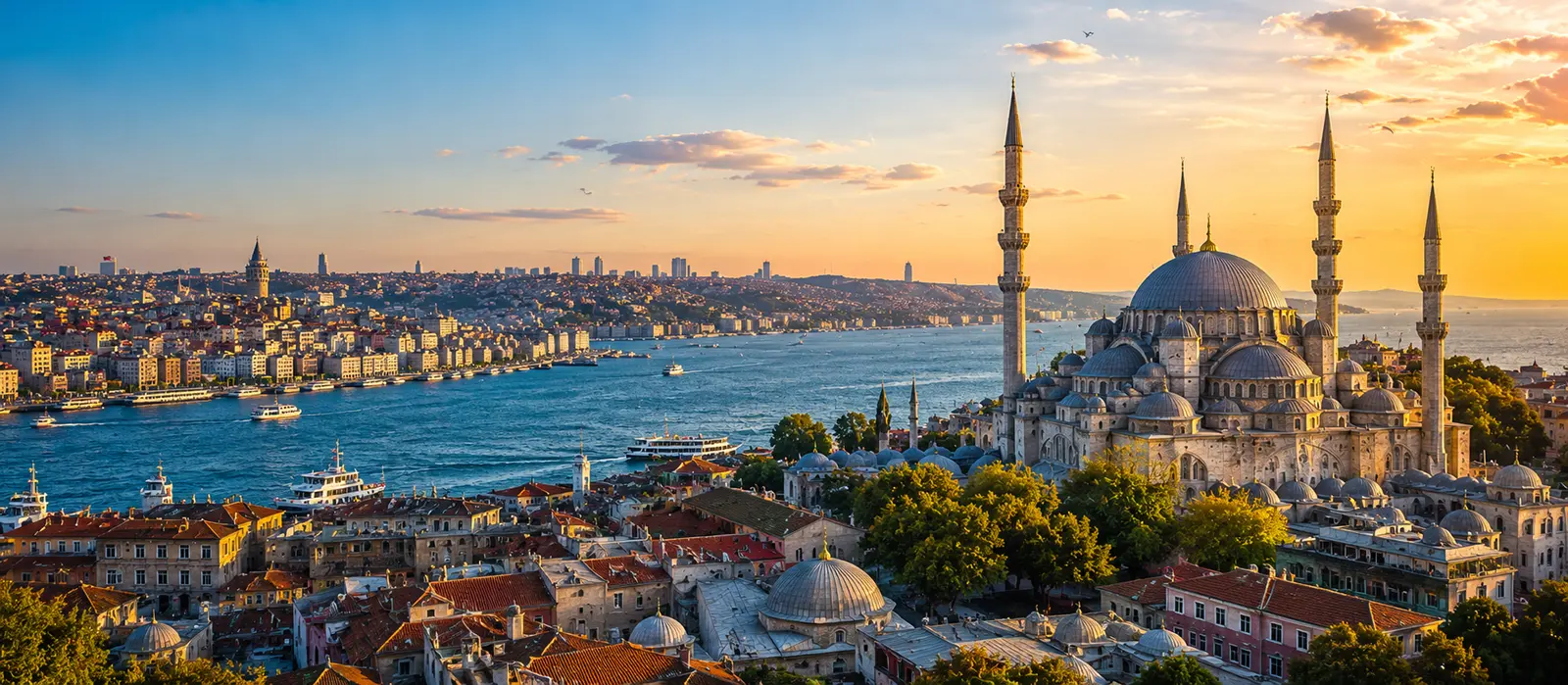
Is Awareness More Important Than Worry in Istanbul?
Awareness watches the street; worry watches itself.
Yes. Awareness is more useful than worry in Istanbul because awareness notices what is happening and leads to a proportionate action. Worry often repeats possible dangers without improving the next decision.
Istanbul is a vast, crowded, fast-changing metropolis. Ferries, narrow streets, transport hubs, nightlife districts, markets, major attractions, demonstrations, hills, and unfamiliar routines can demand attention. Constant alarm is not the same as attention.
Awareness watches the street; worry watches itself.
Smart Tip
Build one repeatable safety routine: secure phone and wallet before entering a crowd, check the route before moving, confirm price or payment procedure before accepting a service, and leave any interaction that becomes pressuring. The routine should take seconds, then return your attention to the city.
Awareness and worry use attention differently
Awareness asks concrete questions. Where am I? What changed? Is my bag closed? Does this vehicle match the booking? Is the street becoming empty? Is this gathering an event, a queue, or a demonstration? What is my nearest simple exit?
Worry asks the same question repeatedly without gaining new evidence: What if something happens? It may keep the body activated even when the environment has not changed.
The difference is not bravery. It is whether attention produces information and action.
Useful concern ends with a decision
A practical safety method establishes a situational baseline. Once the ordinary pattern is understood, unusual pressure or movement becomes easier to recognize.
On a ferry, the baseline may be passengers boarding quickly and finding seats. In a bazaar, it may be dense movement and repeated sales invitations. Near an attraction, it may be guides, queues, and people stopping abruptly for photographs.
Awareness does not search for danger everywhere; it notices when the situation stops behaving as expected.
A citywide label cannot replace setting-specific judgment
Calling an entire city safe or unsafe compresses millions of daily situations into one word. A crowded tram, quiet residential street, late-night entertainment area, hotel lobby, waterfront park, taxi journey, and political gathering present different questions.
Time also changes the same location. A busy commercial street in early evening may feel different after businesses close. A square used normally one morning may contain a major event or demonstration later.
Check current official travel advice before departure and during the trip. Broad guidance establishes the larger context; direct observation manages the moment in front of you.
| Setting | Useful awareness | Proportionate action | Unhelpful worry |
|---|---|---|---|
| Crowded tram or ferry | Doors, bag closure, phone position, personal space | Move valuables inward and prepare before the stop | Assuming every nearby passenger is a threat |
| Tourist attraction | Official entrance, queue, ticket source, meeting point | Use authorized channels and keep the group coordinated | Reading every approach as an attempted crime |
| Taxi or ride | Vehicle, route, meter or agreed price, payment method | Verify before departure and end a doubtful transaction | Monitoring every turn without understanding the route |
| Night street | Lighting, foot traffic, transport access, open businesses | Choose a clearer route or traceable ride | Believing darkness alone proves immediate danger |
| Large gathering | Purpose, police presence, exits, changing crowd behavior | Leave demonstrations and follow official instructions | Remaining nearby to discover what might happen |
Crowded places require routines rather than suspicion
Official travel guidance commonly emphasizes securing belongings in major tourist areas and crowded public spaces. The useful response is simple: close bags, keep valuables away from easy exterior access, avoid placing a phone on the edge of a café table, and notice contact during boarding or distraction.
This does not require treating the crowd as hostile. Most people are commuting, shopping, meeting, working, or sightseeing. The precaution addresses opportunity, not identity.
Prepare before density increases. Rearranging cash or opening a bag inside a packed doorway creates more confusion than securing everything one minute earlier.
Your phone is both a valuable and a safety tool
A phone holds maps, tickets, hotel details, payment access, messages, and identity information. Protecting it is not only about replacement cost.
Use a secure grip near tram doors, ferry boarding points, road edges, and crowded platforms. Step aside before studying a map so that you do not stop inside moving pedestrian traffic. Download essential details or keep a written hotel address in case battery, signal, damage, or loss removes access.
Awareness protects the device while reducing dependence on it.
Transport awareness begins before the vehicle moves
For public transport, confirm direction and destination before crossing gates or boarding. Crowding can make last-second decisions stressful, especially when platforms serve routes in opposite directions.
For taxis or app-arranged rides, identify the vehicle, understand whether a meter or quoted fare applies, follow the route at a practical level, and keep payment terms clear. A navigational detour can result from traffic restrictions, bridge access, or one-way streets, but unclear explanations deserve attention.
If the driver, vehicle, or payment demand does not match the arrangement, do not allow politeness to overrule the mismatch.
Sales pressure is easier to manage with a prepared boundary
Tourist districts include invitations to shops, restaurants, tours, taxis, nightlife venues, and informal services. An approach is not automatically dangerous, and declining is not automatically rude.
A short response—“No, thank you”—followed by continued movement usually protects both time and clarity. Do not enter a prolonged explanation when you have already decided against the offer.
If someone attempts to separate you from your group, rush payment, handle your card out of sight, change the agreed terms, or create artificial urgency, end the interaction and move toward a staffed, public place.
Demonstrations are not sightseeing opportunities
Political conditions and gathering locations can change quickly. A square or avenue may become crowded, transport may be redirected, and police activity may alter access.
Do not remain at a demonstration to photograph it or determine whether it will become disruptive. Leave by a calm route, avoid arguing with participants or authorities, and follow official local instructions.
Before the day begins, a quick check of current government advice and major local disruptions can prevent arrival at a situation that never needed to become part of the itinerary.
Night changes logistics before it changes danger
At night, ferry frequency, metro service, bus connections, business hours, pedestrian traffic, and visibility may differ. A route that was easy in daylight can require more transfers or a steeper, quieter walk later.
Plan the return before energy and phone battery decline. Know the final public transport option relevant to your route, or choose a traceable ride from a well-lit pickup point.
The goal is not to avoid Istanbul after sunset. It is to prevent a pleasant evening from ending with an improvised transport problem.
Fatigue can imitate carelessness
Long walking days, heat, hills, crowds, unfamiliar meals, alcohol, and repeated navigation decisions consume attention. The visitor may stop checking prices, leave a bag open, board the wrong route, or accept the first solution offered.
Worry adds another layer of exhaustion. By contrast, a break, water, food, or a simpler plan can restore judgment more effectively than heightened vigilance.
Protecting safety sometimes means reducing the day’s complexity rather than increasing surveillance of the surroundings.
Solo travelers need communication, not constant reporting
A solo traveler can preserve independence while leaving a basic trace: accommodation details stored offline, a planned return window shared with a trusted person, and transport information available when making a late transfer.
Constant live updates may make the trip feel supervised and can consume battery. Use check-ins at meaningful transitions instead—arrival, major route change, or return after a late evening.
When meeting someone new, choose a public place, keep control of transport, and avoid handing over documents or devices without a clear reason.
Families should simplify the separation problem
In crowds, families can become separated through closing transport doors, sudden stops, queues, and conflicting walking speeds. Decide in advance what happens if someone loses sight of the group.
Give children an accommodation card or contact method appropriate to their age. Choose a visible meeting point before entering a large attraction or market. Adults should know who is watching luggage and who is watching movement.
Clear roles reduce the need for everyone to worry about everything simultaneously.
Preparation should be small enough to maintain
An elaborate safety system often collapses during a real travel day. A shorter routine is more durable: copies of essential documents stored securely, emergency and insurance details available offline, accommodation address saved, payment options separated, and official advisory sources bookmarked.
Do not carry every original document, all cash, and every payment card in one easily lost place. Separation creates recovery options.
Preparation has succeeded when it reduces the number of decisions required under stress.
| Worrying thought | Useful question | Immediate action | When to escalate |
|---|---|---|---|
| “This crowd feels unsafe.” | What specifically changed? | Secure belongings and move toward space | Leave if pressure, conflict, or police activity develops |
| “This route looks wrong.” | Does traffic or access explain it? | Check the route and ask clearly | End the ride in a safe public place if the mismatch persists |
| “Someone is pressuring me.” | Have terms changed or consent been ignored? | Decline, stop payment, and leave | Seek staff or police help if followed or threatened |
| “I cannot find my group.” | What was the agreed meeting point? | Stop moving and use the contact plan | Ask official staff for help when needed |
| “This is an emergency.” | What happened, where, and who is affected? | Call 112 and provide clear location details | Follow operator and responder instructions |
Use a six-step awareness reset
When unease rises, convert it into six checks:
- Stop: Move out of pedestrian flow, traffic edges, or a pressuring interaction.
- Locate: Identify the street, station, landmark, vehicle, or nearest staffed place.
- Observe: Name the specific change that caused concern instead of expanding it into a general fear.
- Secure: Check belongings, phone, companions, payment cards, and essential documents.
- Choose: Continue, change route, enter a public place, contact accommodation, or leave the area.
- Escalate: Use official staff, police, insurer, consular support, or 112 when the situation requires it.
Some concern deserves immediate respect
Calm awareness is not an instruction to rationalize every warning sign. Threats, unwanted following, physical contact, escalating aggression, medical emergencies, missing vulnerable companions, fire, dangerous crowd movement, and official evacuation instructions require prompt action.
Move toward distance, visibility, and accountable help. Preserve evidence only when doing so does not increase danger. Call 112 for genuine emergencies and provide what happened, where it happened, and who is affected.
Trusting a clear internal alarm can be sensible. The next step should still be concrete.
Awareness creates more freedom than worry
Awareness is more important because it remains connected to evidence. It checks official guidance, notices changing surroundings, protects belongings, confirms transactions, preserves exit options, and escalates when necessary.
Worry becomes costly when it consumes the same limited attention needed for navigation, communication, rest, and enjoyment. The answer is neither carelessness nor permanent suspicion.
The safest useful mindset in Istanbul is alert enough to act and calm enough to see what is actually happening.
Did You Know?
Türkiye uses 112 as the single emergency call number for ambulance, fire, police, gendarmerie, disaster response, coast guard, and other urgent services. The official 112 service asks callers to explain what happened, provide a precise location, and state how many people are affected.
Jean Mustafa Kowalski Nakamurason Hernández Obromoviç
Always Local
“I maintained maximum vigilance for six hours and detected three suspicious pigeons, an aggressive simit aroma, and a ferry leaving precisely without me. Then I secured my wallet, checked the timetable, and discovered that practical awareness is much less cinematic but considerably better at getting home.”
Who is this guy?