
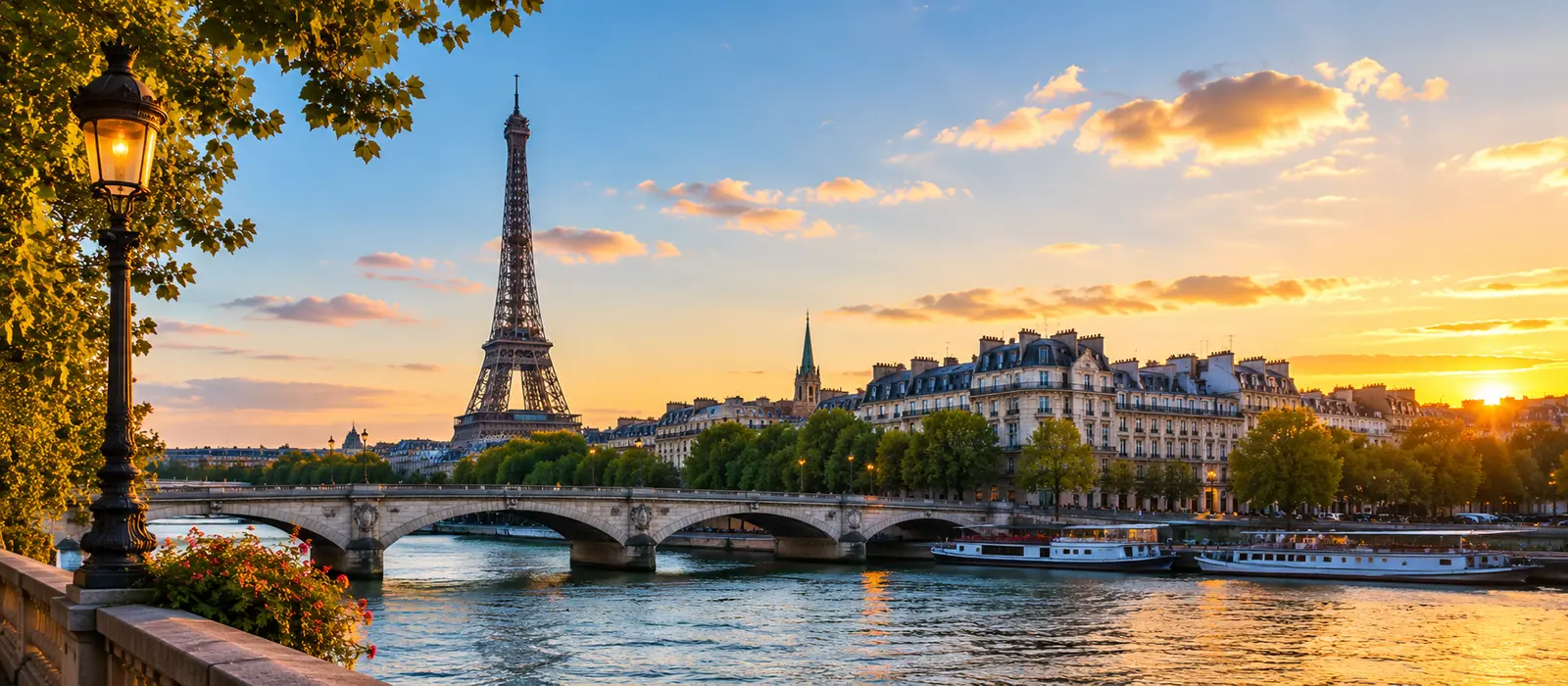
Why Does Crossing The Seine Feel Like Entering A Different Paris?
Sometimes a river separates not places, but personalities.
Crossing the Seine often feels like entering a different Paris because the river has long divided the city into distinct cultural and historical worlds. Although the distance is usually only a few minutes on foot, the atmosphere, architecture, rhythm, and even the way people experience the streets can change surprisingly quickly.
You do not simply cross a river. You often cross from one personality of Paris into another.
The Seine Divides More Than Geography
Rivers naturally separate land, but the Seine has also shaped centuries of urban development. Different neighborhoods evolved on each bank, attracting different communities, institutions, and ways of life. Over time, each side developed its own identity while remaining part of the same city.
Even today, crossing the river can bring subtle changes in architecture, street patterns, cafés, bookstores, and the overall rhythm of everyday life.
The geography quietly becomes culture.
You Feel The Difference Before You Explain It
One of the most interesting things about crossing the Seine is that the emotional shift often arrives before the visual one. The streets may become slightly quieter, cafés feel different, the flow of pedestrians changes, or the buildings seem to tell another chapter of the city's story.
None of these differences is dramatic on its own. Together, however, they create the unmistakable feeling of entering another version of Paris.
Atmosphere changes more quickly than the map suggests.
The Bridge Prepares You For Another World
Crossing a bridge naturally interrupts your journey. For a brief moment, you leave one neighborhood behind without yet arriving in the next. Standing above the river allows your attention to reset before the new surroundings begin.
By the time your feet reach the opposite bank, your mind is already ready to experience something different.
The bridge quietly acts as a threshold rather than simply a crossing.
Why Does The Change Feel So Strong?
One way to understand this is through Boundary Transition. Human beings naturally assign different meanings to spaces separated by visible boundaries, allowing each side to develop its own recognizable character over time.
The Seine therefore does more than divide Paris geographically. It quietly organizes the city into different experiences, each with its own rhythm and personality.
A few steps across a bridge can become a surprisingly meaningful journey.
TravelIAQ Insight
Instead of crossing the Seine simply to reach another attraction, pause halfway across the bridge and pay attention to how your surroundings begin changing before you even arrive. The transition itself is often one of the most interesting parts of the walk.
Before And After Crossing The Seine
| Before Crossing | After Crossing |
|---|---|
| One neighborhood's rhythm | Another neighborhood's atmosphere |
| Familiar architectural character | A subtly different urban landscape |
| Established perspective | Fresh point of view |
| Continuation | Renewed curiosity |
Why Returning Visitors Cross The River Repeatedly
First-time visitors often think of the Seine as something to admire. Returning travelers begin treating it as something to experience. Crossing the river becomes a way of changing the mood of the day without leaving the city.
The walk across the bridge becomes a gentle transition between different versions of Paris rather than a simple change of location.
The Common Mistake
The most common mistake is seeing the Seine only as a scenic backdrop for photographs. In reality, it plays an active role in shaping how Paris feels, separating neighborhoods into distinct emotional landscapes while still connecting them through its bridges.
Another mistake is crossing too quickly. The bridge itself is part of the experience, not merely the route to the other side.
Final Recommendation
Cross the Seine slowly whenever you can. Pause in the middle, look both upstream and downstream, then notice how the atmosphere changes as you step onto the opposite bank.
Paris quietly demonstrates that meaningful journeys do not always require great distances. Sometimes a river only a few dozen meters wide is enough to make the same city feel wonderfully unfamiliar again. The Seine does not separate two different cities—it reveals how many different cities can quietly exist within one.
Did you know this about Paris?
For centuries, the Seine has shaped the growth of Paris, influencing where neighborhoods, universities, markets, churches, and government institutions developed. Even today, many visitors instinctively describe experiences on the Left Bank and Right Bank as though they had briefly stepped into different cities.
Observed machine and referral-origin visits only. Counts do not represent total readership.