Continue the Journey

Why Do People Fold Paper Maps Even With Smartphones?

Digital tools show locations. Paper maps reveal relationships.

Paper maps survive because they show the whole landscape at once. The hidden mechanism is context. Travelers often understand places better when they see relationships instead of turn-by-turn instructions.

Smartphones are faster, more accurate and easier to use. Yet paper maps remain surprisingly popular among some travelers. The reason is not nostalgia alone. Paper maps provide context. They show neighborhoods, distances and landmarks simultaneously, allowing people to build mental models of unfamiliar places. Digital navigation often hides these relationships because it focuses on the next turn. Researchers studying spatial memory have found that broader visual context helps people remember routes and locations more effectively. Paper maps slow travelers down, but they often deepen understanding. People think maps exist to prevent getting lost. Sometimes they exist to help people understand where they are in the first place.
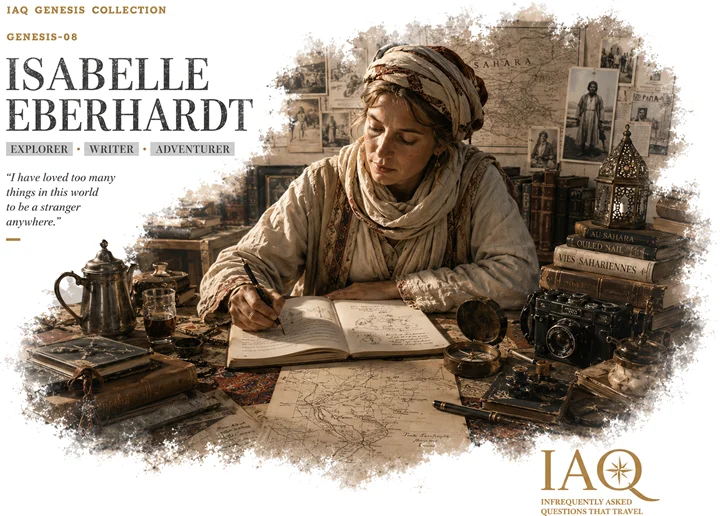
Why do people fold paper maps even with smartphones?

TravelIAQ Is Not a Traditional Travel Website

TravelIAQ is a question-driven discovery engine built for curious travelers. Instead of focusing only on destinations, hotels, and attractions, it explores overlooked questions, local realities, cultural differences, travel decisions, costs, risks, and everyday experiences through interconnected knowledge.

Every question leads to another question. Every answer opens a new path for discovery. TravelIAQ helps travelers explore not only places, but also ideas, assumptions, behaviors, and the hidden signals that shape real-world travel.