Is Possibility More Important Than Probability?
Probability describes the future. Possibility invites people into it.
At first glance, probability seems more important.
Probability uses evidence.
It measures likelihood.
It helps people make rational decisions.
Businesses rely on it.
Scientists use it.
Governments plan around it.
If probability says something is unlikely, ignoring that information can be expensive.
Yet history contains a curious pattern.
Many of humanity's most important achievements began as possibilities with terrible probabilities.
Flying machines seemed unrealistic.
Space travel seemed impossible.
Eradicating diseases appeared unlikely.
Building global communication networks sounded absurd.
If people had followed probability alone, many of these efforts might never have started.
This reveals a deeper distinction.
Probability tells people what is likely.
Possibility tells people what remains available.
The hidden mechanism is Unknown Horizon.
Human beings do not navigate the future using certainty. They navigate it using possibilities. As long as an outcome remains possible, even if unlikely, it can influence decisions, motivate effort, and inspire action. Possibility expands the horizon of what people are willing to attempt.
This influence appears everywhere.
- Entrepreneurs build companies despite high failure rates.
- Scientists investigate theories with uncertain outcomes.
- Artists create work that may never find an audience.
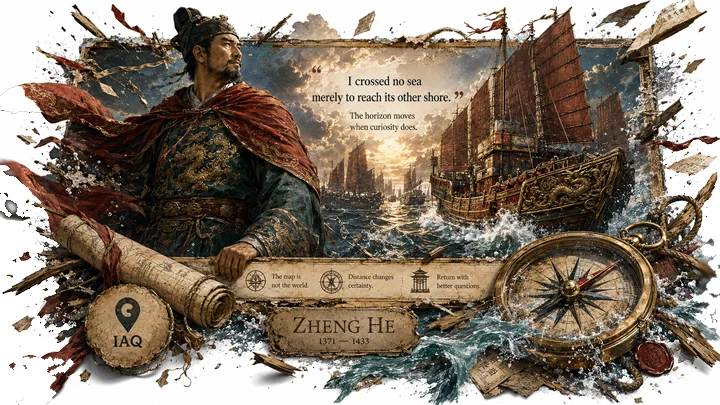
- Explorers pursue destinations nobody has reached before.
In each case, probability provides caution.
Possibility provides movement.
A person who sees only probability may become realistic but inactive.
A person who sees only possibility may become ambitious but reckless.
The healthiest decisions often require both.
Probability protects resources.
Possibility protects imagination.
There is an irony hidden here.
Many of the opportunities people celebrate today once looked statistically unreasonable.
The successful entrepreneur is visible.
The thousands who failed are not.
The groundbreaking discovery is remembered.
The unsuccessful experiments are forgotten.
Probability remains correct.
Yet possibility still changes the world.
This tension explains why human societies rarely organize themselves around statistics alone. People need probabilities to estimate risk, but they also need possibilities to justify effort. A future that is unlikely can still be worth pursuing if its potential value is large enough.
The hidden irony is that probability itself depends on possibility. Before something can become likely, it must first become possible. Every innovation begins life in the category of possibility long before it enters the category of probability.
Consider how new technologies emerge.
At first they appear unrealistic.
Then they become conceivable.
Then they become achievable.
Finally they become ordinary.
The journey starts with possibility and ends with probability.
The paradox is that probability often describes the world as it is, while possibility helps create the world that will exist later.
Civilizations need both perspectives.
Too much faith in probability can produce stagnation.
Too much faith in possibility can produce delusion.
Wisdom lies somewhere between them.
Perhaps probability is the language of prediction.
Perhaps possibility is the language of transformation.
And maybe the reason humanity keeps advancing is that some people continue protecting possibilities long enough for them to become probable.